Kazuo Ozaki
Horse mackerel, Hakata-style layered pressed preparation
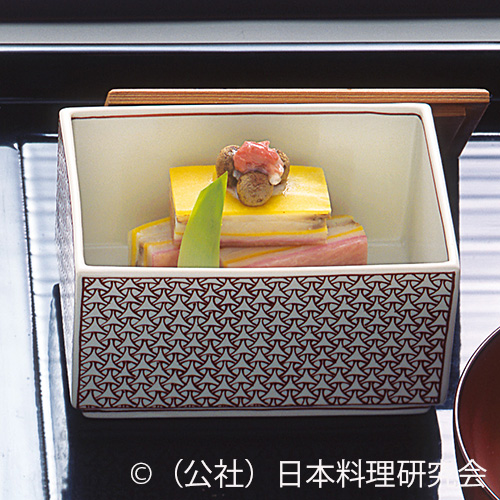
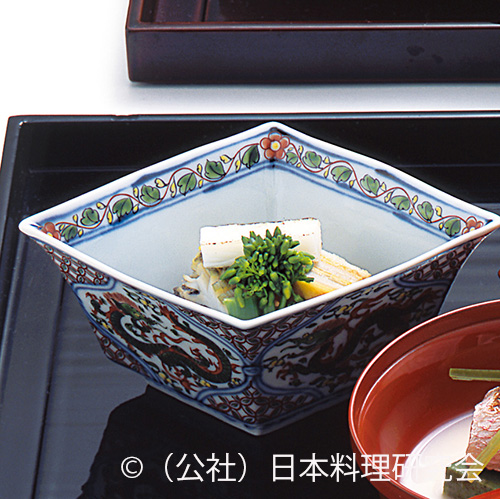
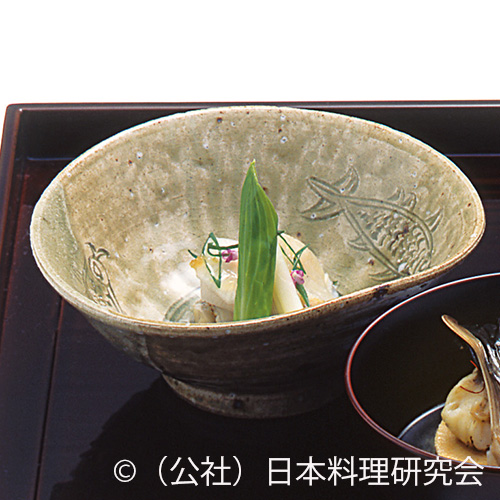
This is appetizer four (Hagi). For the horse mackerel Hakata-oshi, we use watermelon radish. Using Kyoto carrot brings out a beautiful red, but…
Kazuo Ozaki
This is appetizer four (Hagi). For the horse mackerel Hakata-oshi, we use watermelon radish. Using Kyoto carrot brings out a beautiful red, but…
Kazuo Ozaki
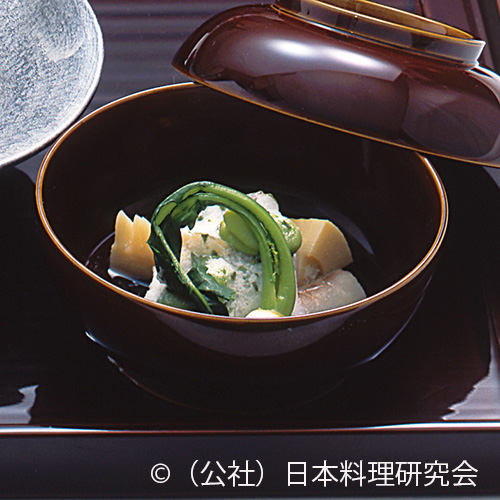
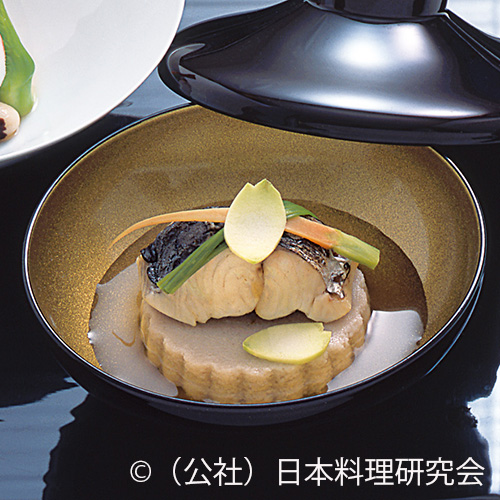
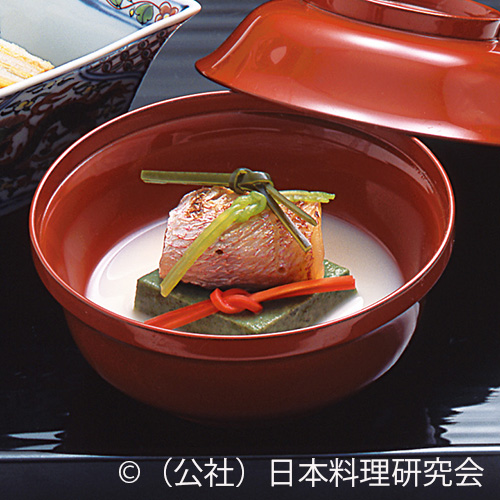
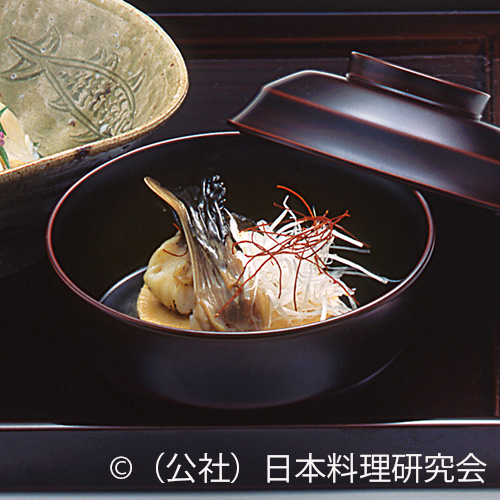
This is soup course five (Hotoke-zaki). The mugwort tofu beneath the Kasuga small tai was made with soy milk to bring out a color contrast.

Kazuo Ozaki
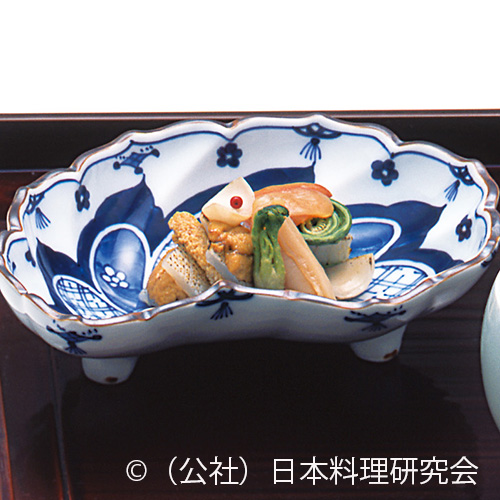
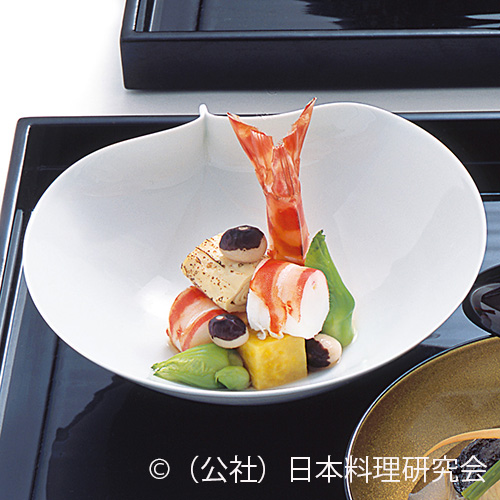
This is starter two (Aio). Aio Bay was the first place in Japan to begin kuruma prawn aquaculture. As always, we simmer it in sake. Anno sweet potato…

Kazuo Ozaki
This is soup course two (Shimonoseki). Monkfish from Yamaguchi differs from that of Hitachi -- at two to three kilograms it is smaller, but with a…

Kazuo Ozaki
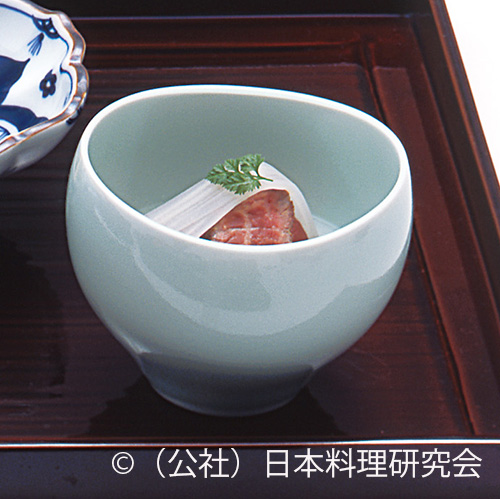
This is soup course one (Abu). This is Japanese Polled beef, a hornless wagyu breed. When the beef knuckle is steamed and simmered, then sliced, it…

Kazuo Ozaki
This is starter three (Kaminoseki, Shimonoseki). We use conger eel caught near Itsukushima Shrine.

Kazuo Ozaki
This is soup course six (Hagi). In Yamaguchi, plenty of small tilefish come in, and wakame is also harvested in abundance. I steamed both and…

Kazuo Ozaki
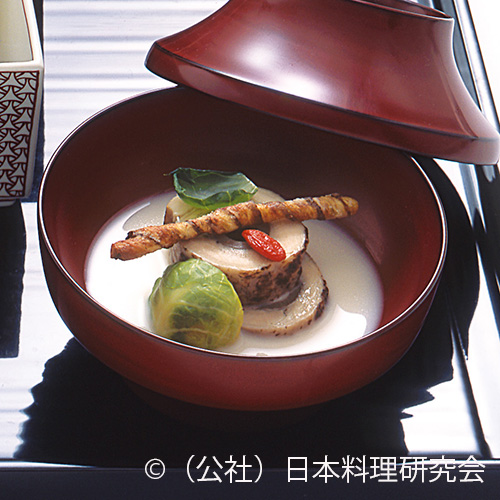
This is soup course four (Mine). Choshu Akajidori chicken is usually prepared as a simmered assortment, but this time I tried a somewhat…

Kazuo Ozaki
This is soup course three (Iwakuni, Hagi). It is a shinjo made by combining Iwakuni lotus root with ground lizardfish paste, then steamed.

Kazuo Ozaki
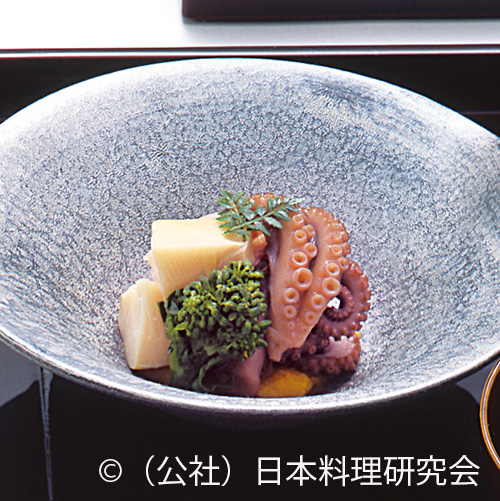
Starter six (Yanai, Hikari, Omijima) uses shellfish caught in the Seto Inland Sea and the Sea of Japan.

Kazuo Ozaki
This is appetizer one (Nagato). Speaking of Yamaguchi, one thinks of tiger puffer from Shimonoseki, but from the end of January into February, purple…

Kazuo Ozaki
This is starter five (Suo-Oshima). Suo-Oshima, known as 'the Hawaii of Japan,' enjoys a fine climate, and it is said that virtually any fish can be…