Rakantei
Tadayoshi Fujiki
Kenji Naruke
Our proprietress practices Japanese traditional dance, and the vocal calls given during the performance are known as interjecting calls. At our…
Katsuo Inoue
Kappo Nihonbashi Toyoda
Toru Hashimoto
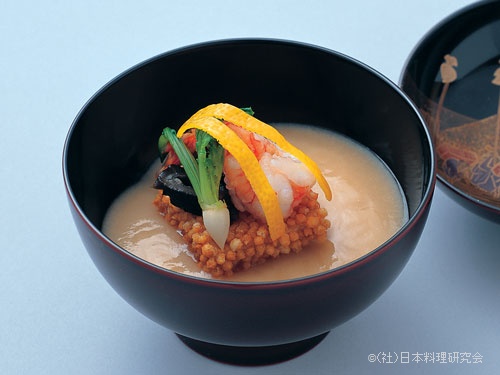
For the soup course, Tokyo guests tend not to favor the mellow, heavy flavor of white miso, so I made a blended-miso style by combining white miso…
Tsuburano Shinjuku Gyoen branch
Hitoshi Iizuka
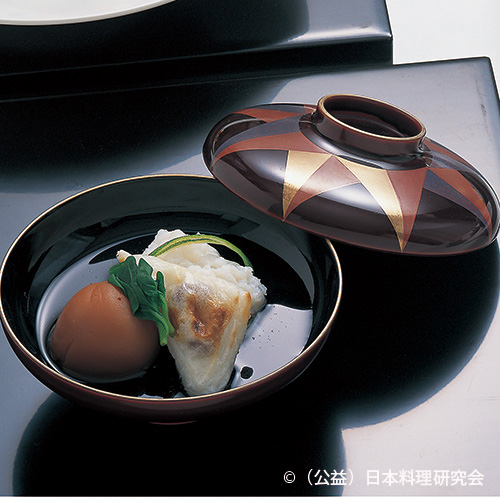
The hamo (pike conger) is bone-scored as usual, dusted with kuzu starch, and boiled in kombu-infused water. The minazuki yaki-mochi is cut into the…
Yasunobu Yamamoto
Kiyoshi Yokoi
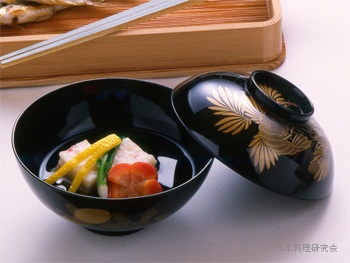
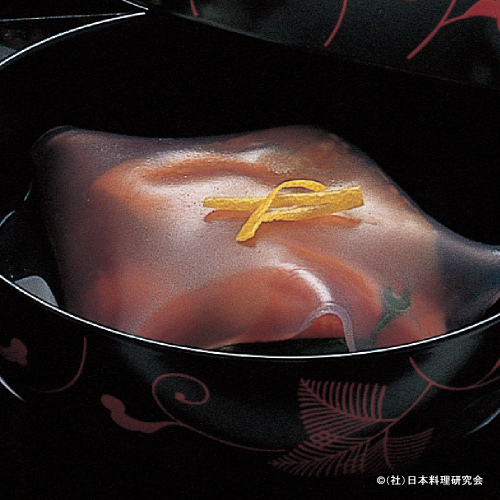
I covered it with itawarabi (a flat bracken-starch sheet) to express an indescribable hazy autumn moon. It is blended half and half with ago dashi…
Masatsugu Isaka
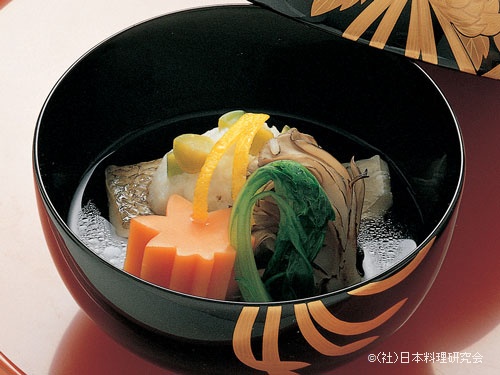
The clear-soup course is a blackthroat seaperch turnip clear soup. For the maple-leaf tofu, I made a red bell pepper kuzu-starch-set tofu and cut it…
Toshiaki Omori
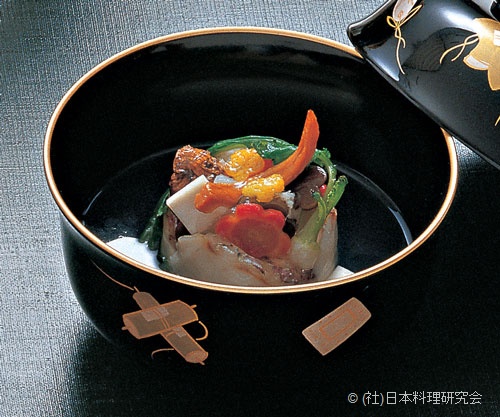
I made it as a clear soup relying on the ingredients' own flavor rather than dashi, but since I thought it might taste a bit fishy together with the…
Toshiaki Asano
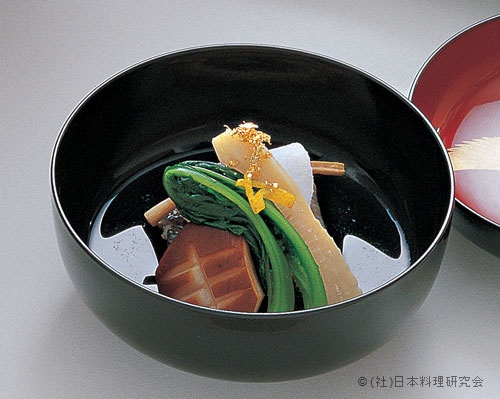
For the clear-soup course's hanabira mochi, I knead rice flour with a little potato starch in lukewarm water, cut it into ovals with a mold, and tuck…
Akasaka Shozan
Eiki Nakagawa
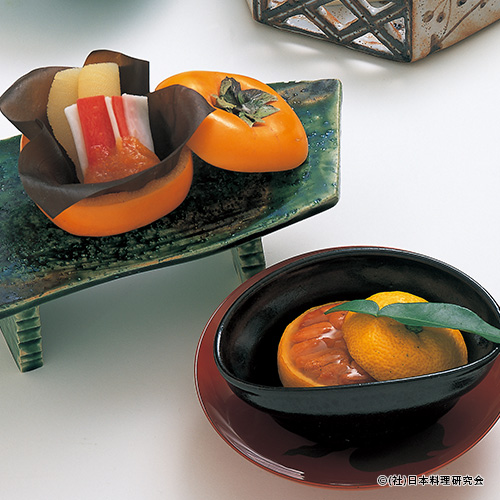
The namasu served in the persimmon cup is arranged so the daikon and carrot resemble reins (tazuna), hence tazuna namasu. For the persimmon vinegar…
Takaaki Ariake
Takaaki Nakamura
Koji Tsukino
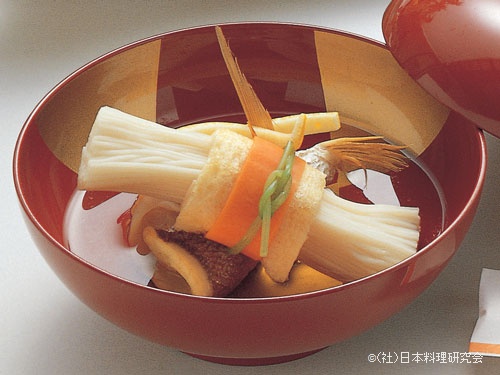
The Nankan somen used in the simmered-bowl course is a specialty of this region — hand-stretched in the traditional way, it has a firm bite. It's a…
Kazuo Ozaki
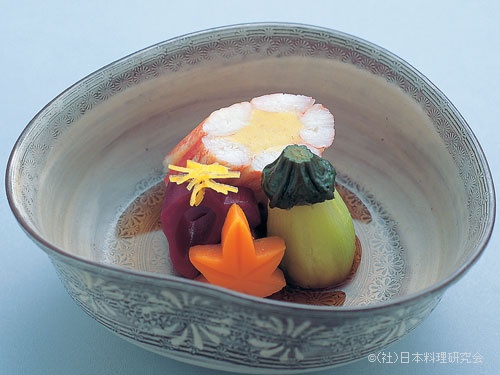
For the bundled matsuba-gani, I've cut it on the diagonal, since cutting it straight would make it look like a plum blossom — though in winter…
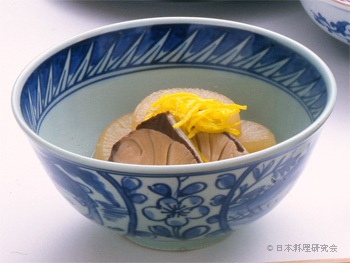
Yasunobu Yamamoto
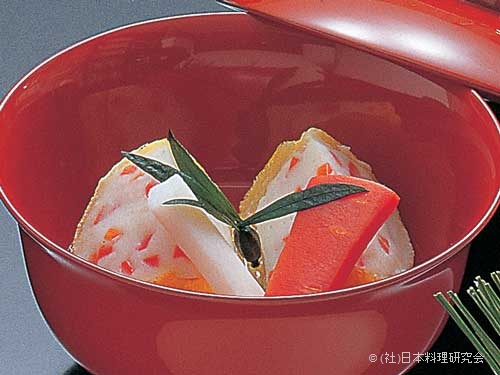
Josui Kaikan, Kyohantei
Hiroshi Atsuta
The yuzu used in the yuzu hanpen is cultivated rather than wild, so it has little harsh bitterness; I simply let it sit soaking in water for about a…
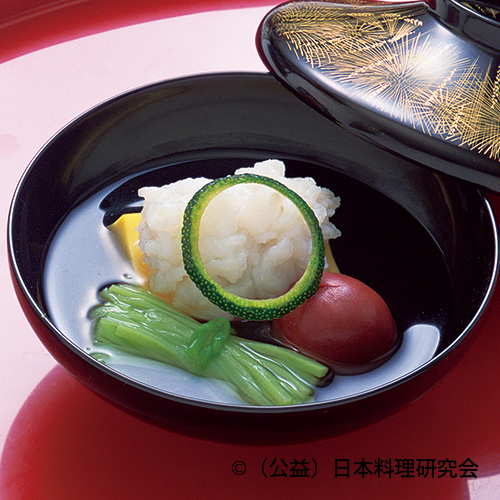
Masatsugu Isaka
Next is the soup course. For the pike conger dusted with Yoshino kuzu, I bone-score the hamo, dust it with Yoshino kuzu starch, and finish it in…
Japanese Cuisine Kukai
Tomoyoshi Sato
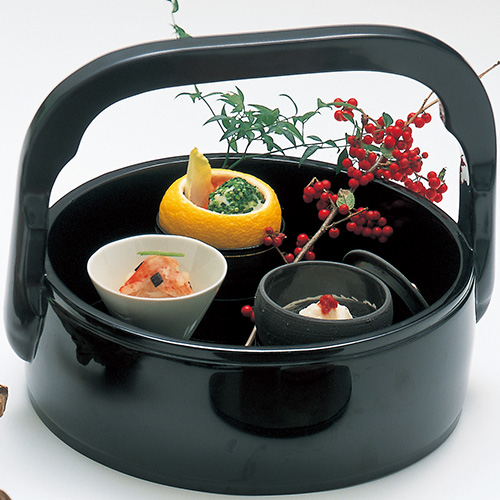
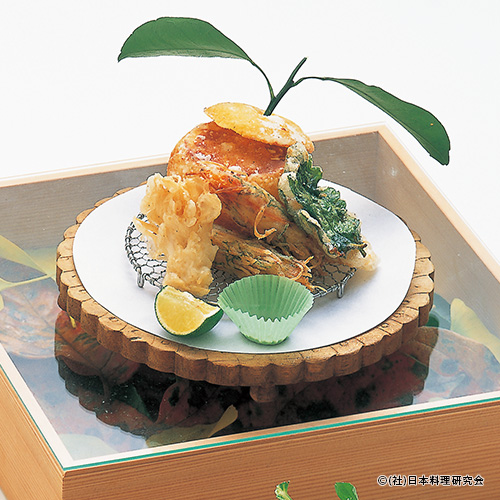
The fried course is deep-fried items served in a hollowed-out yuzu shell. At our restaurant, when we want grated yuzu, we grate the peel using the…
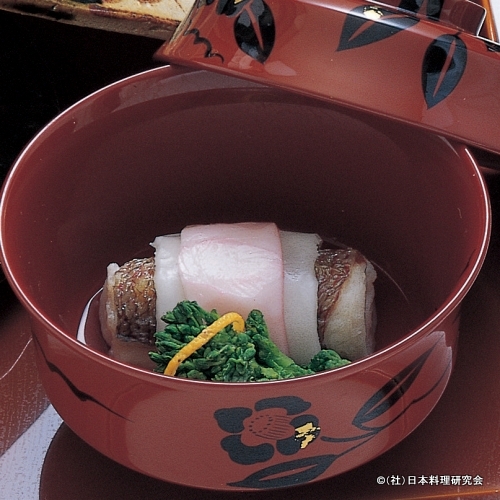
The clear-soup course is sea bream simmered to a plump, glossy finish, with red-and-white mochi. I suppose you could call this a fairly standard…
Katsumori Ashizawa
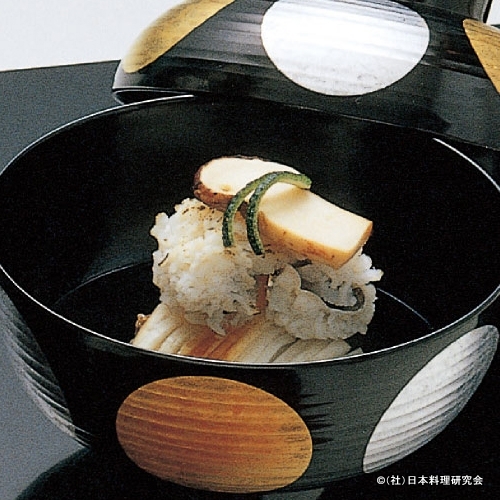
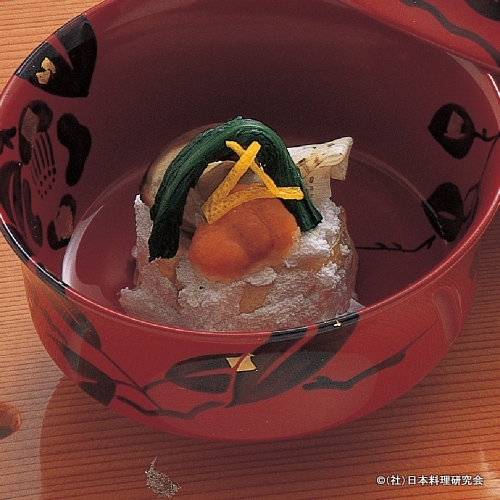
The soup course is buckwheat groats wrapped in yuba. The buckwheat groats are well rehydrated and gently formed into a small ball with hanpen…
Kazuo Ozaki
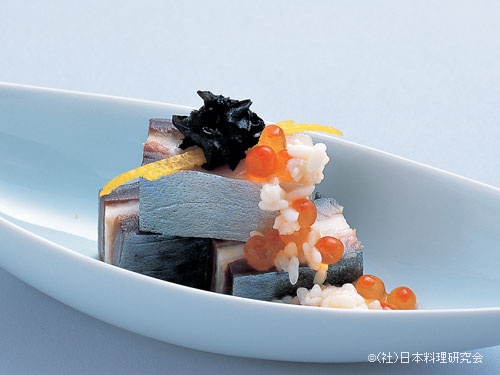
Kabura-zushi is definitely a winter food. Winter turnips firm up and become dense in flesh. Summer turnips have a lot of moisture, which suits them…
Ginza Okubo
Kinya Okubo
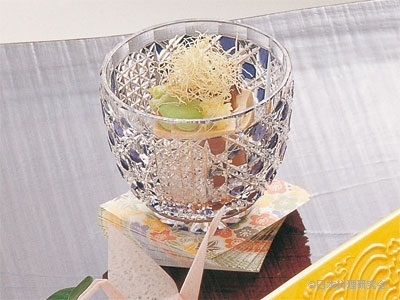
The shira-ae is thinned slightly with shirozake — a sweet, cloudy, low-alcohol rice drink — in a nod to the Peach Festival, but because the shirozake…
Shoichi Kenmotsu
Showing 24 of 211