
Read the article: Simmered namasu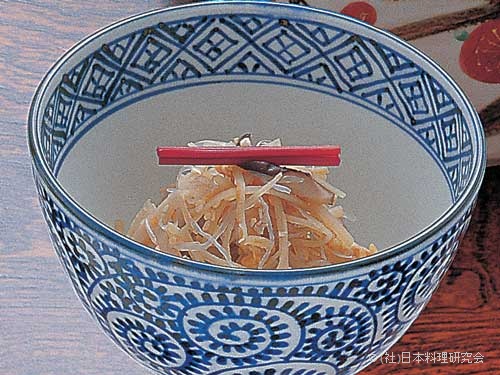
Kenichi Kobayashi
Simmered namasu
Ni-namasu is a Kyoto obanzai (everyday home-style) dish, and a New Year's dish. It has a crisp, crunchy texture, and since it's prepared with…
Kenichi Kobayashi
Ni-namasu is a Kyoto obanzai (everyday home-style) dish, and a New Year's dish. It has a crisp, crunchy texture, and since it's prepared with…
Shiro Ogawa
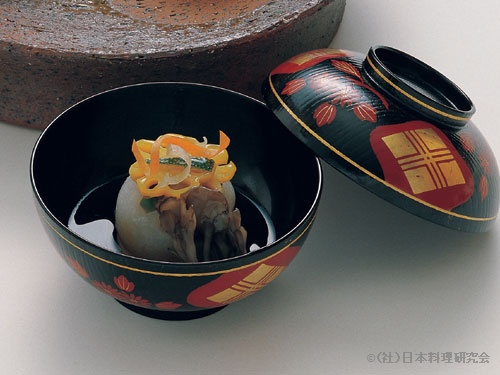
The soup course is a crab and lotus root yose. To keep the lotus root from discoloring, always soak it in vinegar water and then alum water. Boil it…
Masami Watanabe
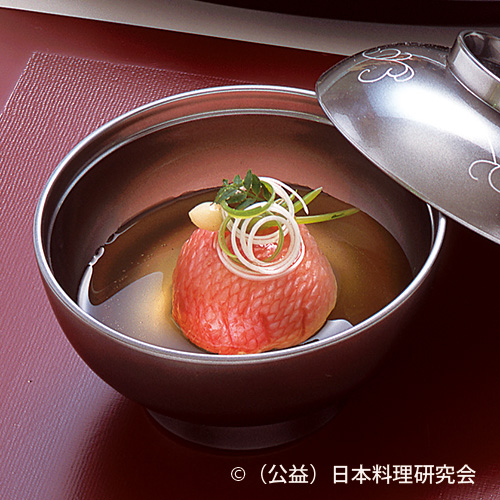
The soup bowl course is kinmedai (splendid alfonsino) shinjo. The kinmedai is prepped, with just the skin removed and set aside. The flesh is…
Mitsuo Tamura
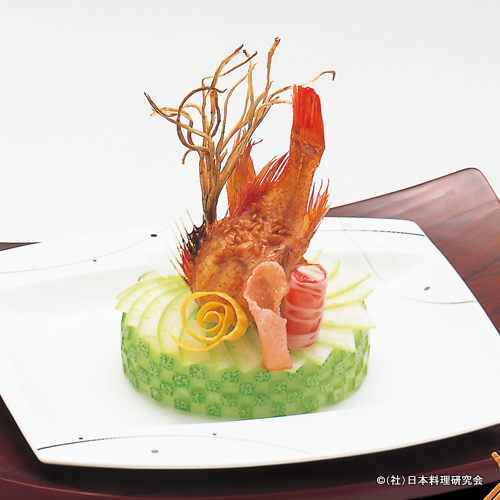
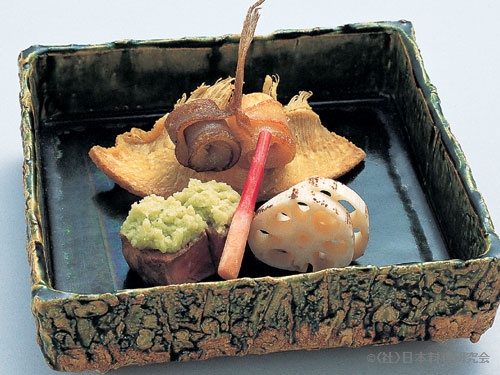
Next is the grilled course. For the candied new ginger, simmer it down using sugar at roughly 80% of the ginger's weight (a ratio of about 10 to 8)…
Hiroshi Hosaka
Tokyo Kaikan
Naoto Suzuki
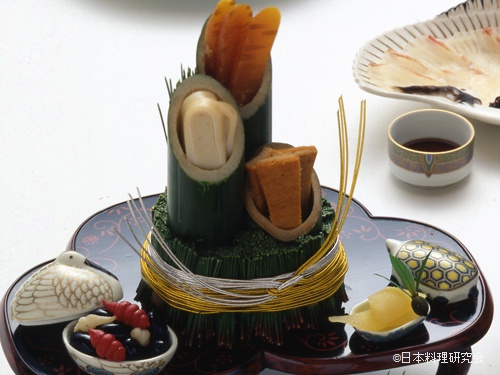
The celebratory New Year dish is arranged to suit New Year decorations, so we've also included ceremonial paper strips and pine-bamboo-plum motifs…
Tokyo Airport Restaurant
Hiroshi Nagashima
Katsumori Ashizawa
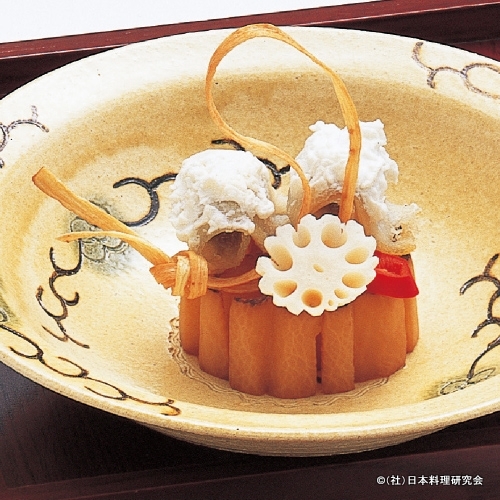
For the conger eel snow mountain, daikon radish forms the base, and conger eel together with a meringue "foam snow" create the snow-mountain effect…
Toru Kimura
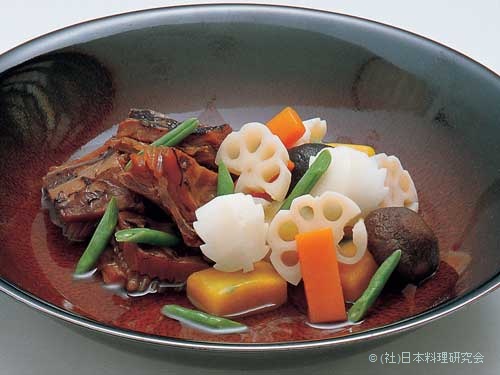
For the simmered course's ray and seven-color vegetables simmered together, rather than reconstituting the dried ray at room temperature, I place it…
Akio Saito
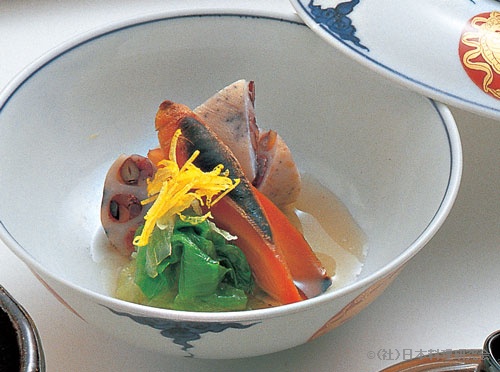
Shokuyo cuisine — called macrobiotic in the West — doesn't mean giving up fish and meat; it means eating in balance. We also follow the principle of…
Tokinoniwa Ginza store
Nobuo Otawa
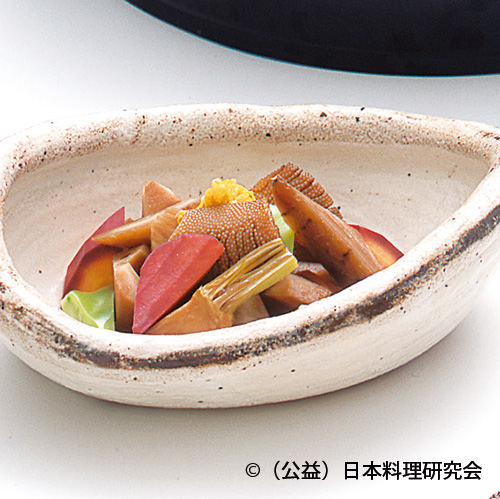
As an accompaniment to the shinogi, served as a palate-refresher between courses, this is herring roe and root vegetable pickle. Every year, from the…
Showing 11 of 155