Ningyocho Imahan
Masayuki Yokota
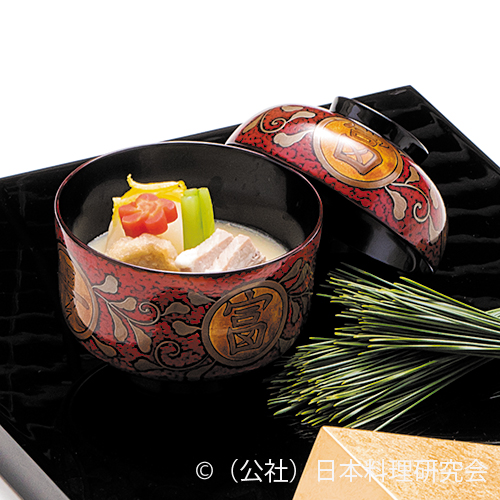
Pork Belly Simmered in Sake Lees
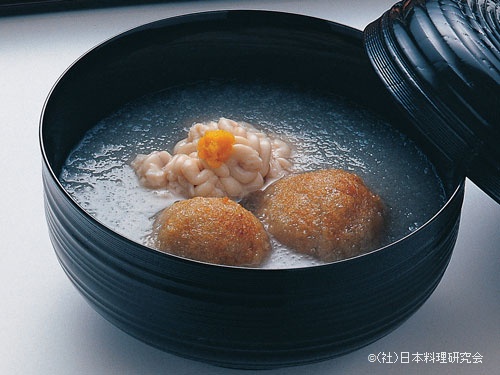
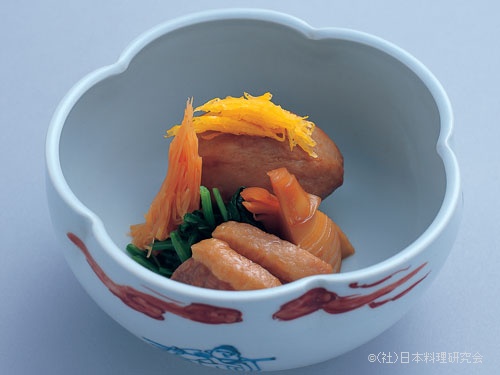
This is the simmered course. For the pork belly simmered in sake lees, I had previously salt-cured the pork belly directly, but a colleague from…
Ningyocho Imahan
Masayuki Yokota
This is the simmered course. For the pork belly simmered in sake lees, I had previously salt-cured the pork belly directly, but a colleague from…
Yasuhiro Ohashi

Kappo Nihonbashi Toyoda
Toru Hashimoto
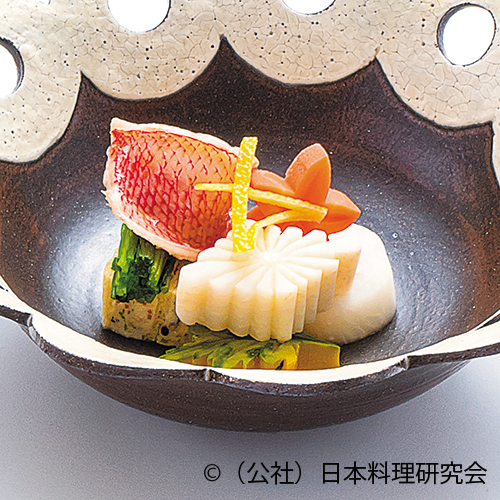
For the simmered dish, I made our restaurant's standard 'black' simmered dish, but rather than simmering the ebi-imo (shrimp-shaped taro) as is and…

Takashi Okada
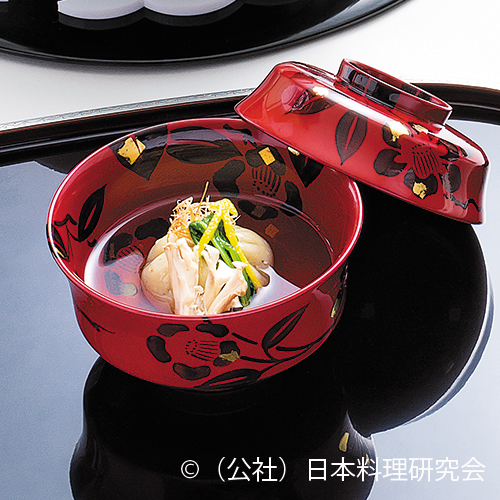
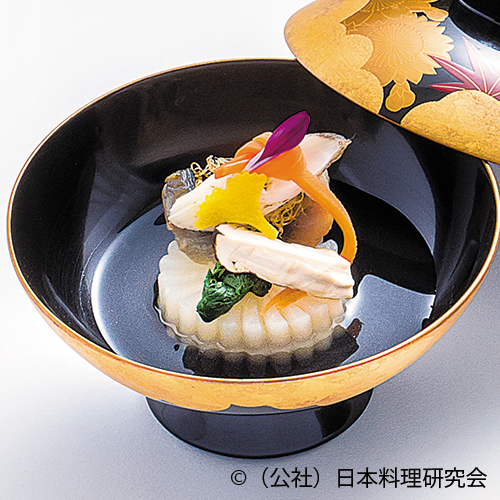
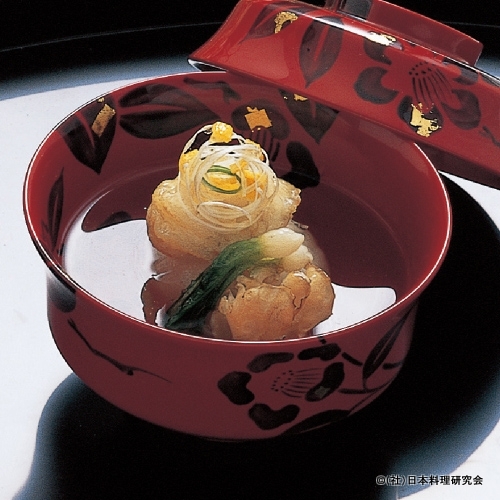
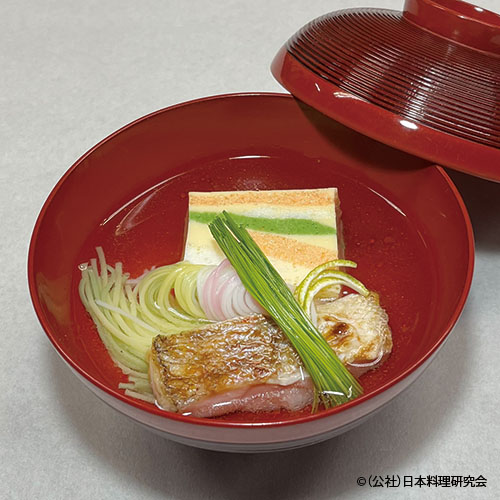
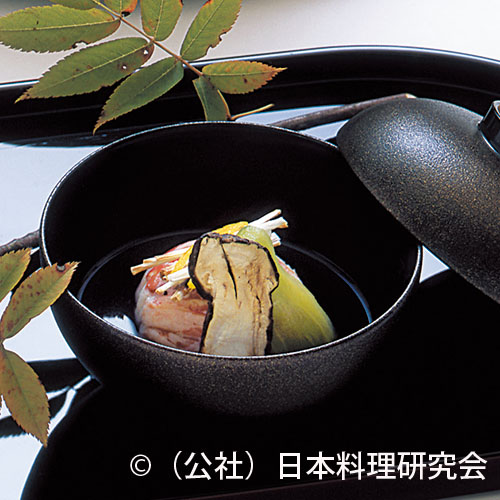
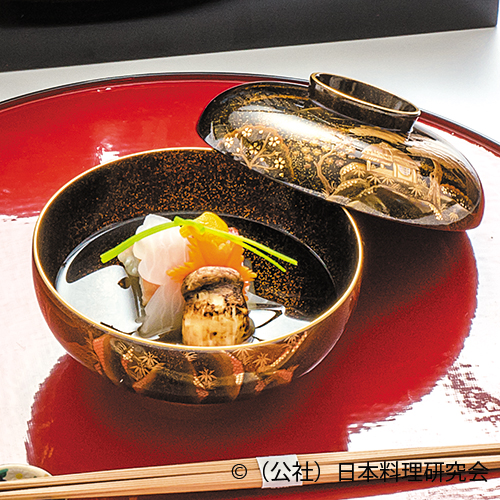
This is the owan, the clear-soup course. For the seared yagara, October is when yagara is at its best, so this time I salted it and seared it quickly.
¥420
Cook time 30 min

Japanese Cuisine Yoshimura
Koichi Tomizawa
This is the simmered assortment. Kyoto taro, unlike ordinary taro, holds its shape without falling apart, so steaming it once allows the flavor to be…

Kappo Shimamura
Yoshimasa Aoyama
This is the simmered course. For the Nankan-age conger eel Hakata-style, I used Nankan-age — a thin, crisp fried tofu from Nankan in Kumamoto — which…

Kappo Yamanto
Teiichi Hiratsuka
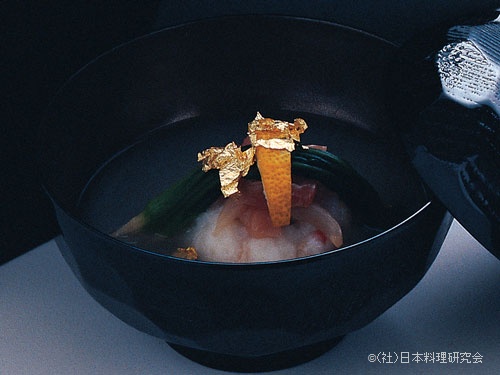
The clear-soup course is oyster kuzu-set chakin. Fresh oysters are shucked and rubbed clean with grated daikon, then quickly blanched for about five…

Kappo Shimamura
Yoshimasa Aoyama
This is the soup course (owan). The senba-jitate — a broth in the Senba merchant-quarter style of Osaka, made using the whole fish including the…

Japanese Restaurant Seizan (Michelin two stars)
Haruhiko Yamamoto
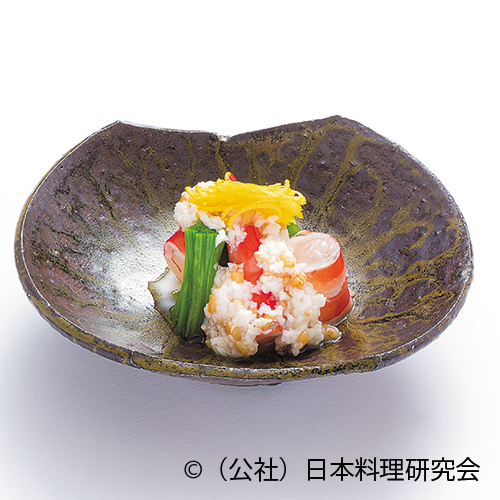
This is the kuruma prawn and Japanese parsley in yam dressing. We remove the head and back vein from 60-70g kuruma prawns, deep-fry them, and drop…

Tsukiji Honganji Japanese Restaurant Shisui
Yutaka Ogawa
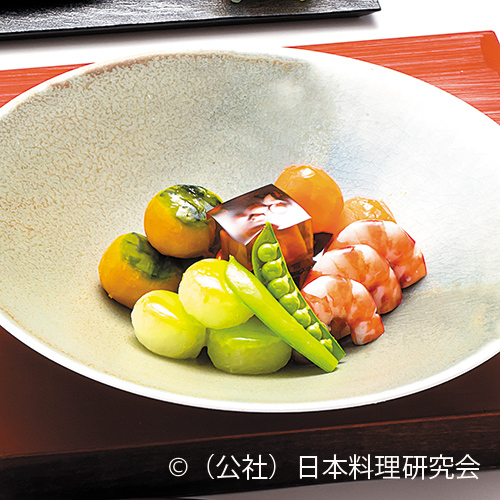
This is a chilled nimono, a simmered dish. For the octopus in the simmered-tender amber jelly, the octopus is beaten with daikon and softened by…

Japanese Cuisine Yoshimura
Koichi Tomizawa
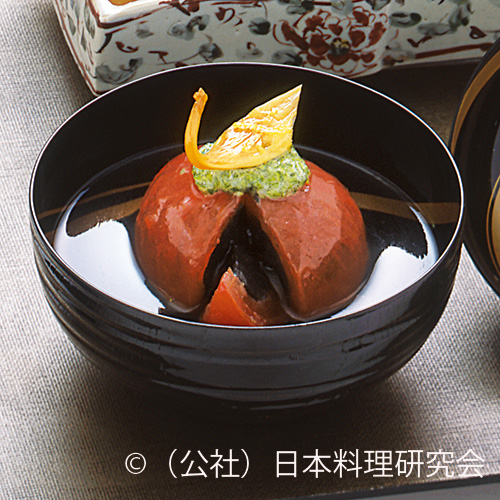
The clear-soup style bowl uses a first-extraction dashi of bonito and kombu. For the molded tomato, peeling the skin afterwards means the knife cuts…

Yukinori Nishikawa

Tanimoto (Michelin one star)
Seiji Tanimoto
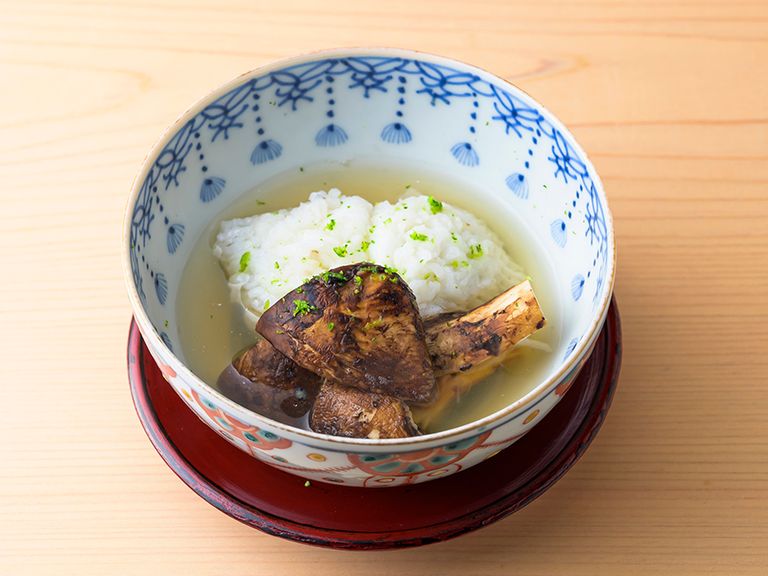
This is what's known as a 'deai-mono' — a dish pairing two ingredients that come into season together — for autumn. It's a simple dish you often see…
Serves 4 · ¥5,000
Cook time 20 min

Kappo Shimanpachi
Wakuo Shimada
Yokohama, where my restaurant is located, is a city of diverse food culture: exotic buildings and traditions from abroad remain, while modern…
Serves 8 · ¥4,220
Cook time 1 hr

Tokyo Kaikan Mitsubishi Club
Toru Sugai
This is the 40th micro-season. For the chicken calico press: wanting the salad chicken to come out as soft as possible, I cooked it sous-vide, then…
¥1,500
Cook time 30 min

Kenji Naruke
This is the soup course. For the tai mimaki, I wrapped tai around a fish-paste dumpling filling and steamed it. The bush-warbler-shaped mochi…

Akio Saito
The clear-soup course is late-season pike conger shinjo. Pike conger caught after October grows past 1 kg and becomes larger, taking on more fat…

Kioicho Kissho
Shigemitsu Shimizu
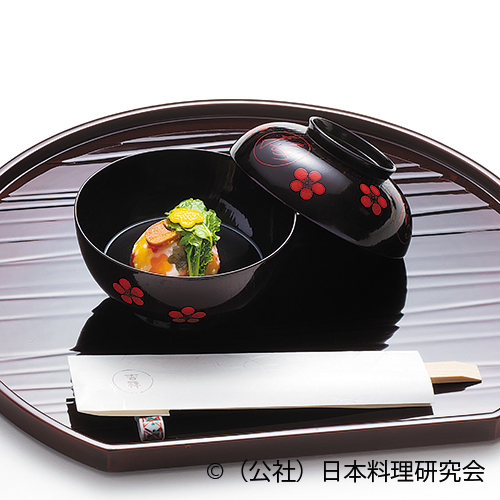
This is the clear-soup course. For the sea urchin plum-blossom shinjo, make the shinjo base from raw fish flesh and wrap it around pre-steamed sea…

Japanese Cuisine Yoshimura
Koichi Tomizawa

Fujikyu Group
Shoichiro Kikuchi
For the soup course: turnip daruma anpei. I add a generous amount of grated turnip to the fish-paste dumpling mixture to make a soft anpei-style…

Tetsuya Motoi
Soup two is a clear broth. For the oil-seared fukko, the skin has a somewhat strong character, so we poured oil at about 180°C over the skin side to…

Shuji Hirata
This is the soup course. For the crab and yam temari dumpling, I used snow crab. The yam batter inside was made a little fluffier than a soft…
Showing 24 of 211