Yanagibashi Kameseirou
Takashi Yoshino
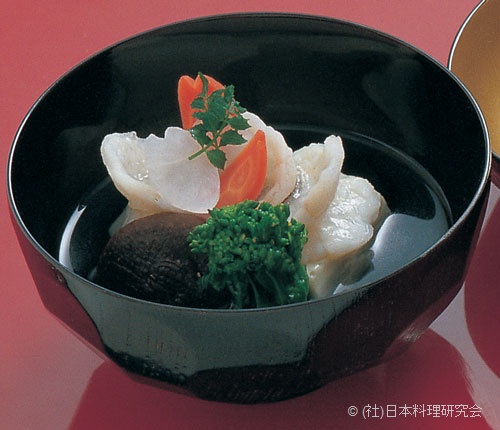
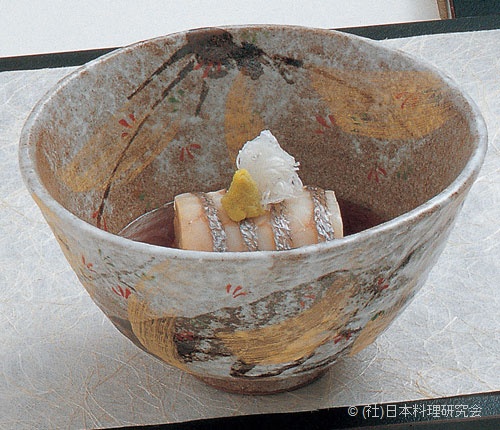
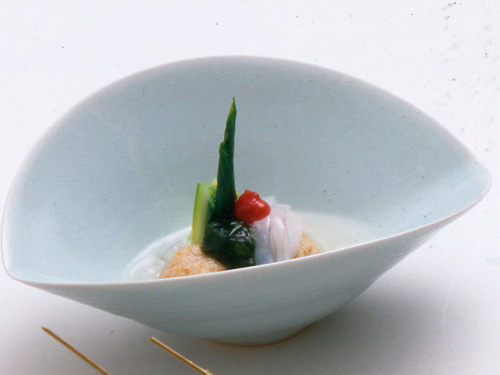
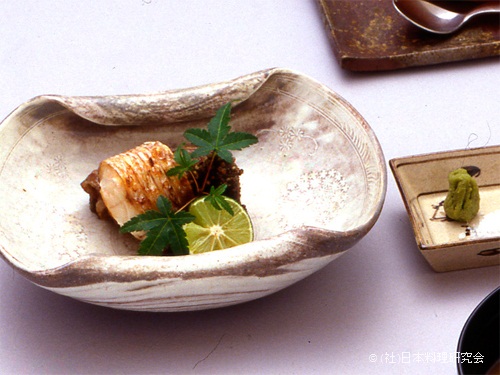
Fat greenling kuzu-tataki
For the soup course's fat greenling kuzu-tataki, the fat greenling is filleted, boned, and split into two thin fillets so it resembles cherry blossom…
Spring

Yanagibashi Kameseirou
Takashi Yoshino
For the soup course's fat greenling kuzu-tataki, the fat greenling is filleted, boned, and split into two thin fillets so it resembles cherry blossom…

Mabuchi Shoji Co., Ltd.
Hidematsu Matsuura
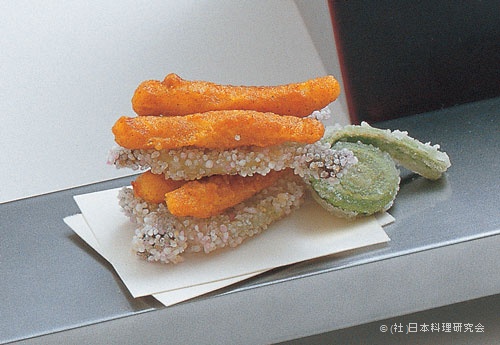
For the deep-fried course, the crab kasumi-age is fried using rice paper. For the potato basket, the potato is peeled into a continuous ribbon…

Toshikazu Yamaguchi
For the grilled course, salt-grilled nodoguro: fillet the nodoguro into three pieces (sanmai-oroshi), remove the small bones, lightly salt it, cut it…

Kaiseki Kameyama
Yoshiyuki Kameyama
For the grilled course, the fond de veau is made by searing veal bones and trim scraps, then simmering them from cold water for about 10 hours to…

Toshishiro Matsushima
As for the fukko wrapped in soba, my shop started making hand-cut soba about three years ago, and it inevitably produces scraps and off-cuts…

Kiyoshi Matsuoka
For the shiitake in the suizu dressing, we score the surface lightly with a knife for ease of serving and eating. The hoshiko (dried sea cucumber…

Koji Soeno
Sakura-chaya was founded in Showa 8 (1933) and is the third-oldest established ryotei (traditional Japanese restaurant) in Mukojima, a district lined…

Koji Soeno
Sakura-chaya was founded in Showa 8 — 1933 — and is the third-oldest established ryotei, a traditional Japanese restaurant, in Mukojima, a district…

Tetsuya Motoi
For the simmered course's nagaimo in shirozake (sweet white sake), since Shinshu has many sake breweries, I used the local shirozake to simmer it a…

Tetsuya Motoi
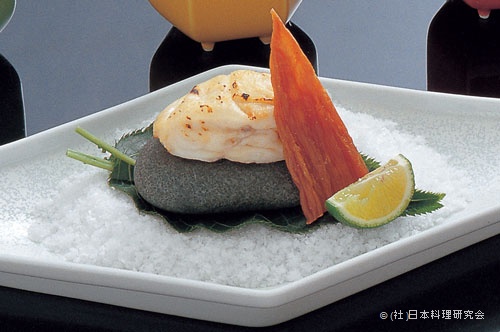
For the appetizer, the fugu shirako and dried sea-cucumber ovary are simply seared and set on a warmed stone — but I think that alone makes for a…

Hironobu Tanaka
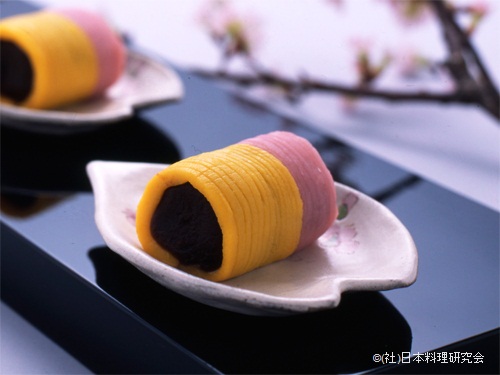
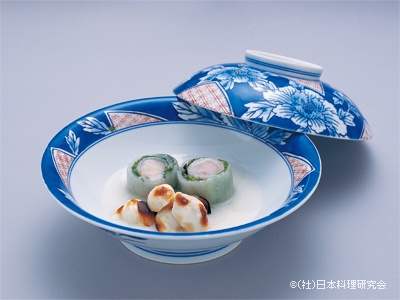
For the two-style mochi roll, we made the mochi portion — which normally wraps around red bean paste in this confection — from potato and egg yolk…

Toshikazu Yamaguchi
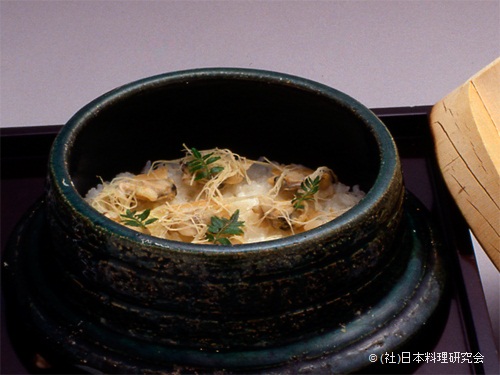
For the rice course, clam rice: extract the clam's dashi, remove the meat from the shells, score it finely, and cut it into bite-sized pieces…

Toshikazu Yamaguchi
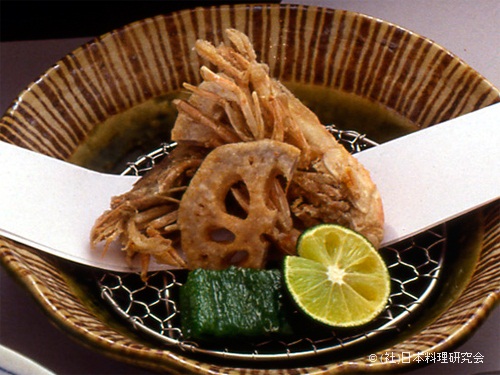
For the tome-zakana (final sake-accompanying dish before rice): coat the gasu ebi and Kaga lotus root with kuzu starch and deep-fry them in oil.

Toshikazu Yamaguchi
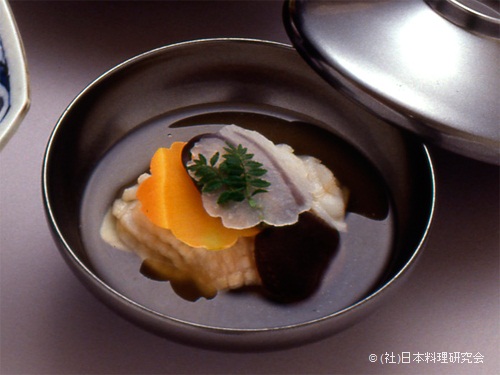
For the soup course, the fat greenling kuzu-tataki: fillet the fat greenling into three pieces, remove the small bones, salt it lightly, score the…

Toshishiro Matsushima
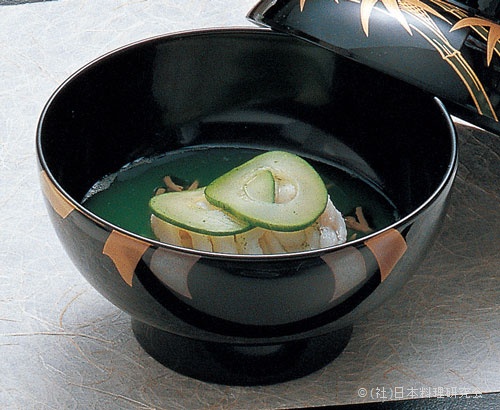
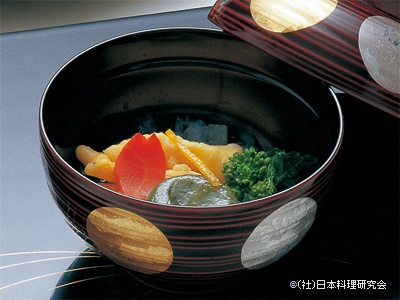
For the soup course, I made a fresh-green style dish using molokheiya. The molokheiya is boiled and then run through a blender ahead of time. A…

Kiyoshi Matsuoka
For the grilled course's kinome-grilled river trout, seasonal river trout is filleted into three pieces to get a boneless fillet, knife-scored in a…

Kiyoshi Matsuoka
For the flavored deep-fried icefish, the icefish is soaked in a sake-and-salt marinade, patted lightly dry, and has its tail and head removed, then…

Shinbashi Kanetanaka
Noboru Matsumoto
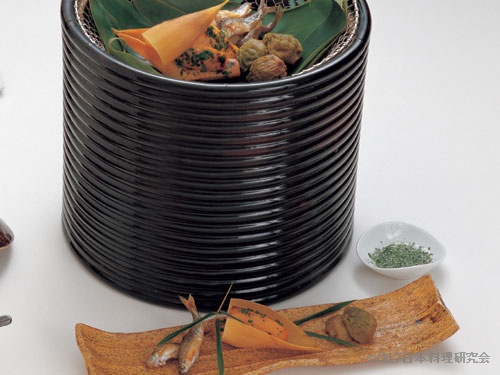
For the grilled course's salt-grilled live moroko, we used moroko farmed in Chiba Prefecture. They're arranged in a small charcoal hand-brazier to…

Chikara Sotoyama
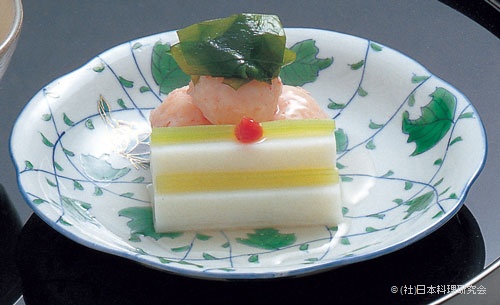
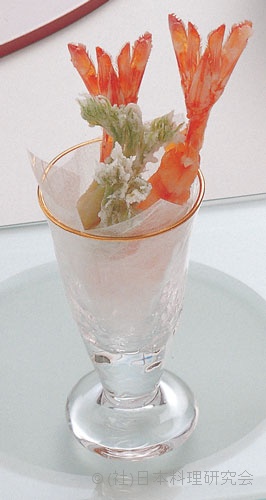
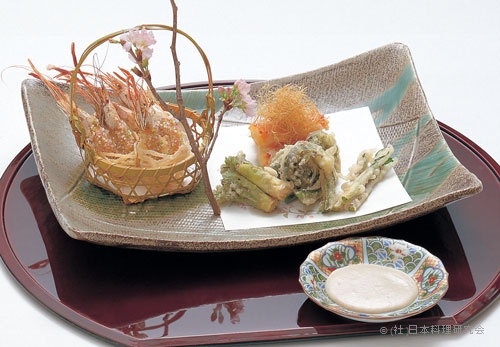
Saimaki prawn hakusen-age is meant to evoke a spring haze. I think saimaki prawns are best without much knife work, deep-fried quickly in high-heat…

Spa Resort Hawaiians
Yoshiyuki Yanagisawa
As for the tomezakana course: so that I can serve a variety of different things, rather than writing 'vinegared dish,' I make a point of writing…

Shiki Yuzen Edo
Ryoichi Hoshino
The batter for the egg-yolk-battered icefish is made by pressing the yolk of a hard-boiled egg through a fine sieve, adding raw egg yolk as well…
Showing 24 of 497