Read the article: Taro stem somen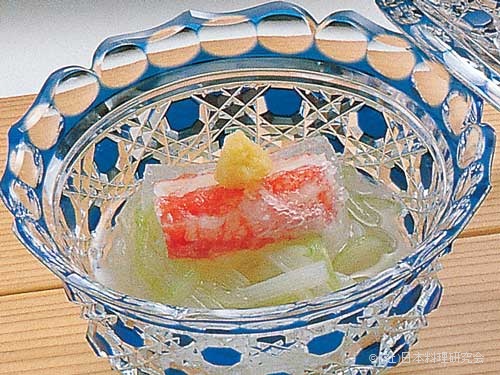
Tetsuichi Shimoyama
Taro stem somen
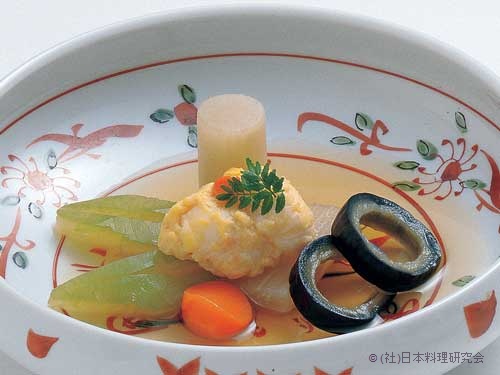
For the taro stem somen, we used white zuiki and green zuiki to make an attractively two-colored somen. The white zuiki is boiled in hot water as…
Tetsuichi Shimoyama
For the taro stem somen, we used white zuiki and green zuiki to make an attractively two-colored somen. The white zuiki is boiled in hot water as…
Kenichi Kobayashi
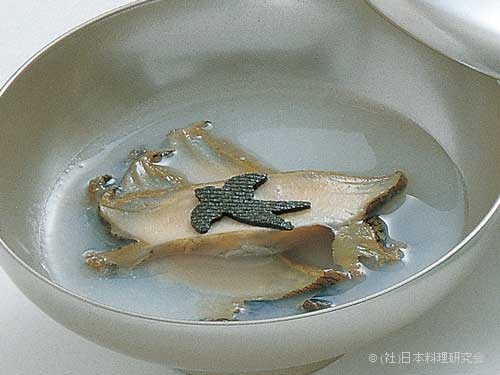
For the soup course, the firm outer part of the abalone is scrubbed well with a brush to tighten it up, then grated to make the surinagashi. The soft…
Yuji Isozaki
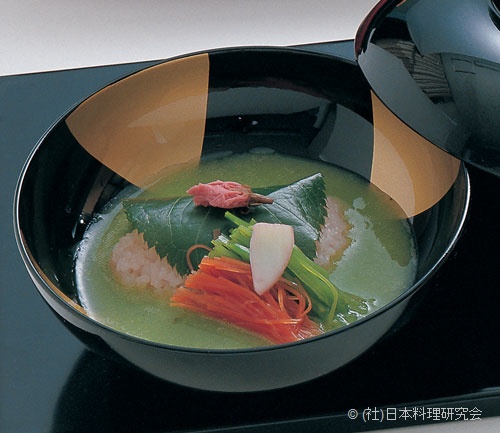
The soup course is a green-hued preparation named for the bush warbler. For the clam sakura-mushi, domyoji flour is reconstituted in kombu dashi…
Kiyoaki Deki
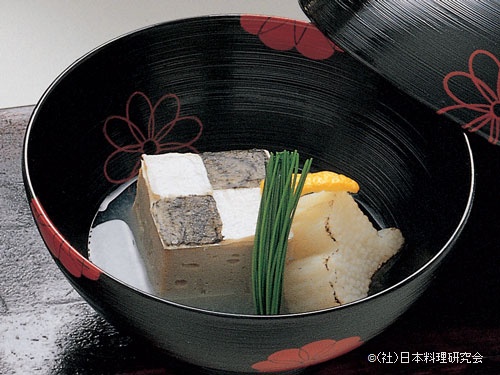
For the clear-soup course, I finely minced mountain yam and stirred it into a lightly kuzu-thickened soup broth, styling it after the first frost.
Toru Komori
Ginza Kasuga
Masaru Yoshii
Hideki Nakagawa
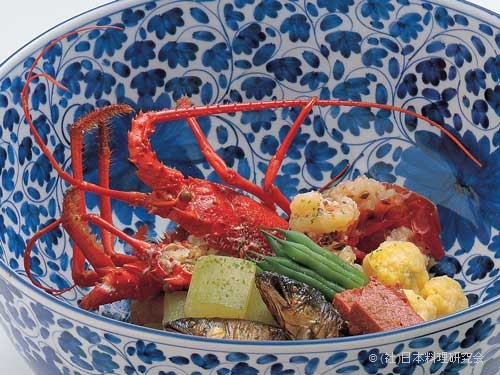
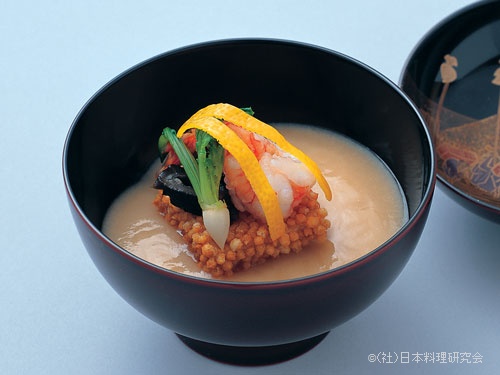
The fermented black beans used in the simmered Ise lobster with fermented black beans are a Chinese ingredient, similar to Daitokuji natto or…
Naokazu Karasawa
Kappo Nihonbashi Toyoda
Toru Hashimoto
For the soup course, Tokyo guests tend not to favor the mellow, heavy flavor of white miso, so I made a blended-miso style by combining white miso…
Minoru Okawara
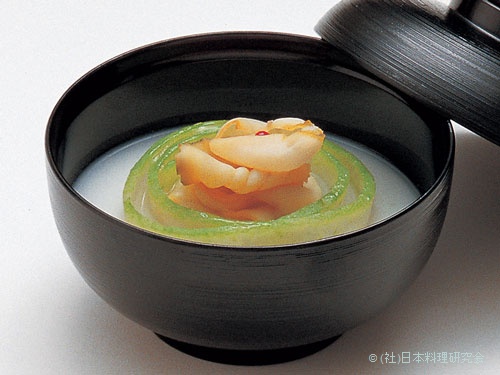
For the soup course's fukura abalone: normally, fukura abalone is slowly reconstituted and simmered until sweet and savory, but since this is a…
Kazuo Ozaki
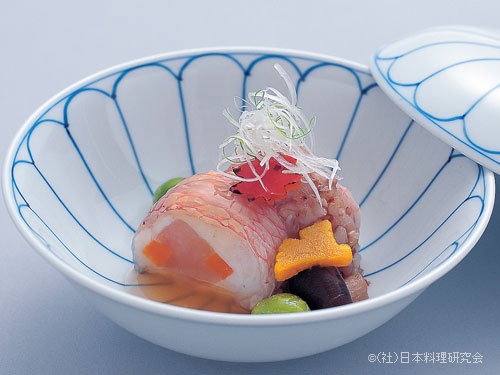
This is the season when turnips (kabura) start to taste their best. When frost falls, root vegetables push moisture out of themselves so they won't…
Akasaka Hikawa
Masaru Tanaka
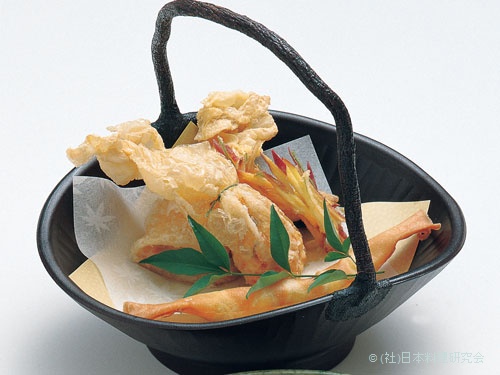
Since the serving dish for the fried course is large, we finished it light and fluffy, but the original idea was actually xiaolongbao (soup…
Goro Tada
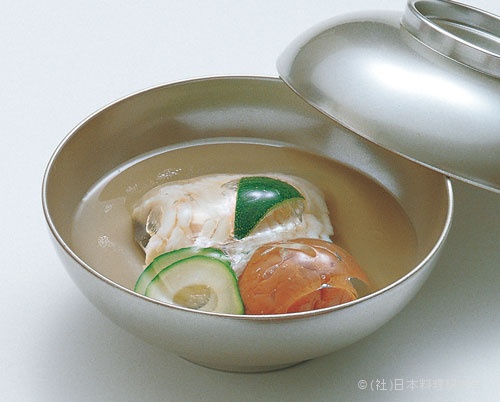
The soup-bowl course is fat greenling, peony-style. In keeping with my teacher's lesson that food tastes best when handled simply, without…
Tetsuichi Shimoyama
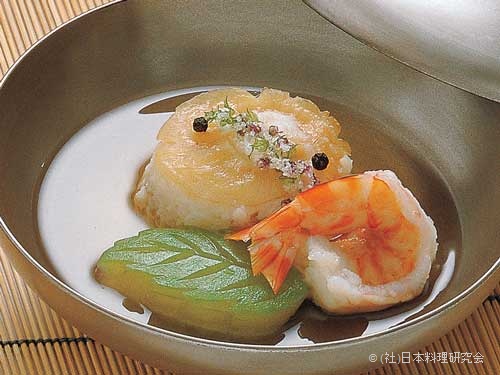
The shark fin and lotus root cake soup course is made by treating fresh lotus root to prevent discoloration, grating it on a grater, folding in…
Kenichi Kobayashi
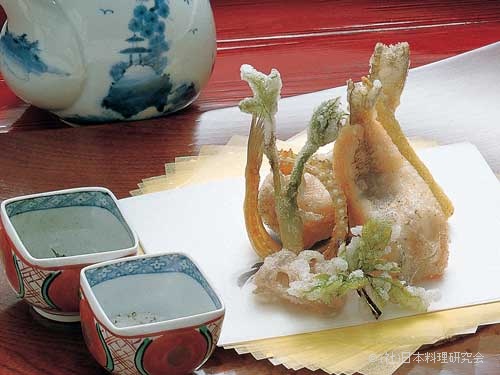
For the fried course's whiting futami-age, rather than filleting the whiting into three pieces, I butterfly it open leaving the tail attached, remove…
Toru Komori
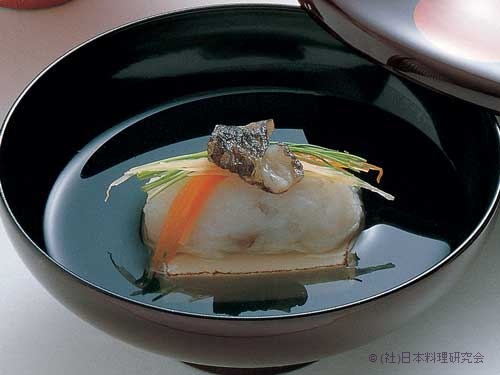
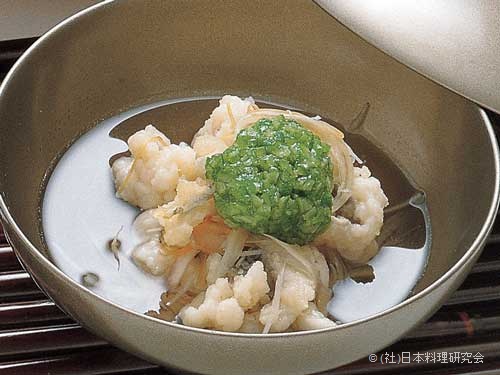
The soup-course dish is scorpionfish (okoze) wrapped in white kuzu with its own liver. Scorpionfish just before its summer spawning is spoken of in…
Hideki Nakagawa
The soup is the usual sawani-style broth combined with deep-fried pike conger (hamo). Sawani soup normally uses pork fatback, but this time we used…
Akasaka Hikawa
Masaru Tanaka
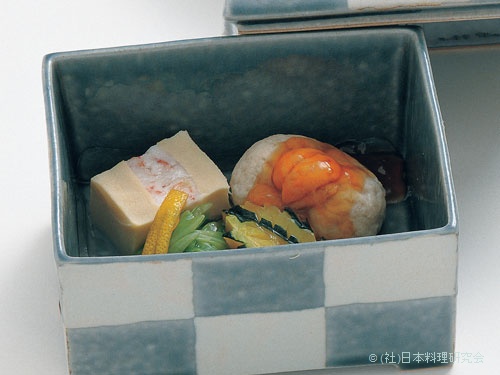
Regarding the shrimp-taro gluten cake in the simmered course — molded with sea urchin, deep-fried, and simmered — we used to often make our own raw…
Toshishiro Matsushima
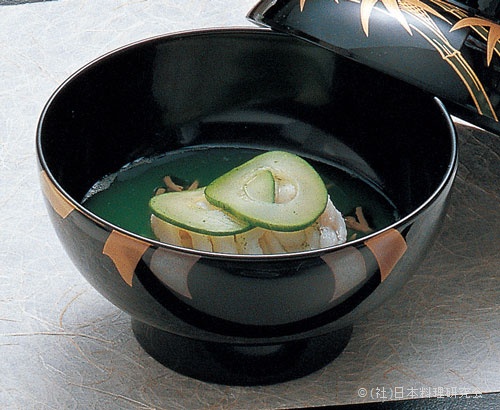
For the soup course, I made a fresh-green style dish using molokheiya. The molokheiya is boiled and then run through a blender ahead of time. A…
Shinbashi Kanetanaka
Noboru Matsumoto
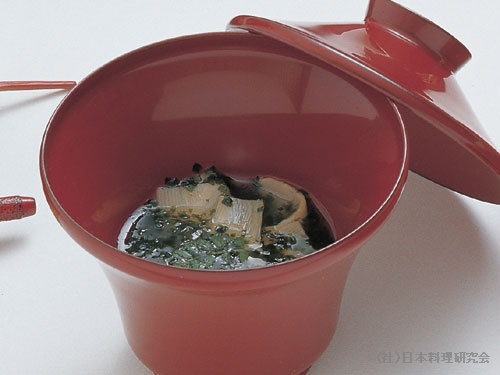
For guests who are drinking sake, filling up on soup means they can't drink as much, yet they still want some soup somewhere along the way. With that…
Showing 24 of 48