Hiroshi Kuji
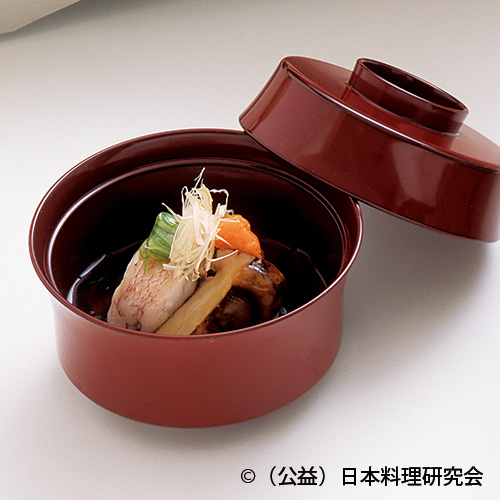
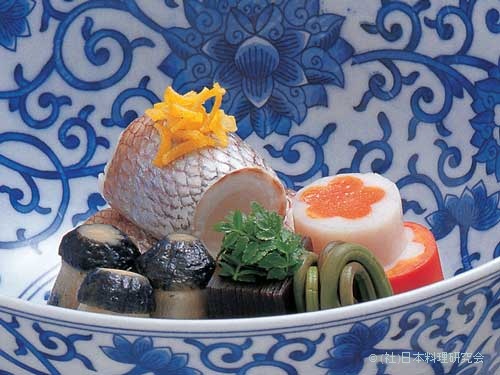
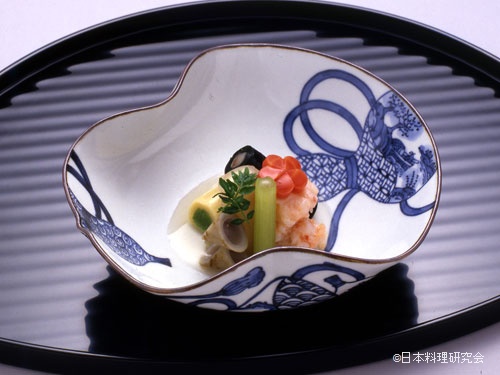
Tilefish in seashore-fragrance style
For the amadai iso-no-kaori style: it's named this way because, due to a fair currently running at the restaurant, we're using aonori (green laver)…
Hiroshi Kuji
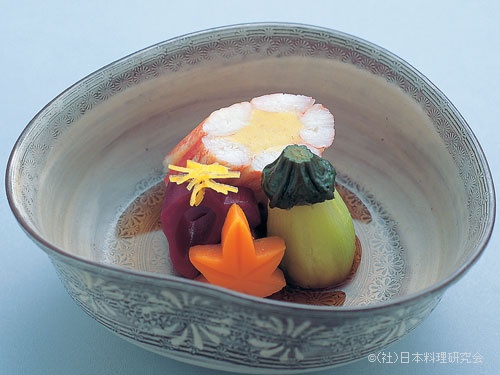
For the amadai iso-no-kaori style: it's named this way because, due to a fair currently running at the restaurant, we're using aonori (green laver)…
Koji Tsukino
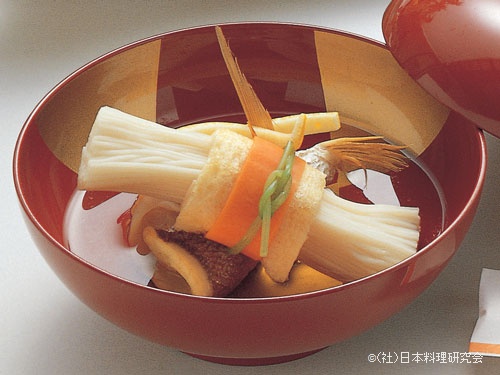
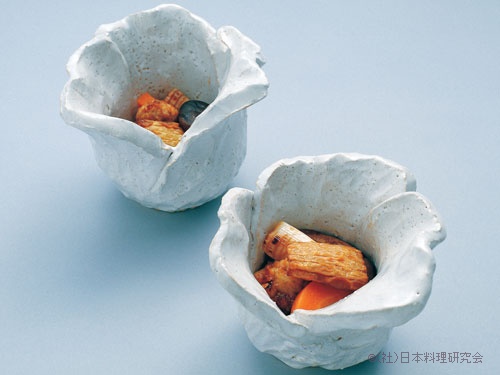
The Nankan somen used in the simmered-bowl course is a specialty of this region — hand-stretched in the traditional way, it has a firm bite. It's a…

Kazuo Ozaki
For the bundled matsuba-gani, I've cut it on the diagonal, since cutting it straight would make it look like a plum blossom — though in winter…

Kiichiro Nonaga
Shinagawa turnip is a white, elongated turnip about 15 cm long. Its flavor is unassuming and simple, without a strong character of its own. In the…

Ginza Kasuga
Takao Shimada
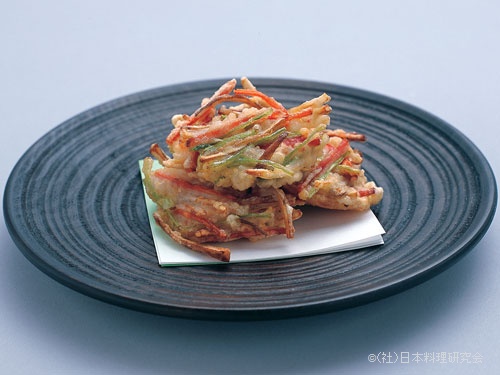
For the burdock, mitsuba, and carrot kakiage with a twist, we kept the texture by coarsely mincing small kuruma prawns by hand. Besides deep-fried…

Josui Kaikan, Kyohantei
Hiroshi Atsuta
The yuzu used in the yuzu hanpen is cultivated rather than wild, so it has little harsh bitterness; I simply let it sit soaking in water for about a…

Umeo Kamikanda
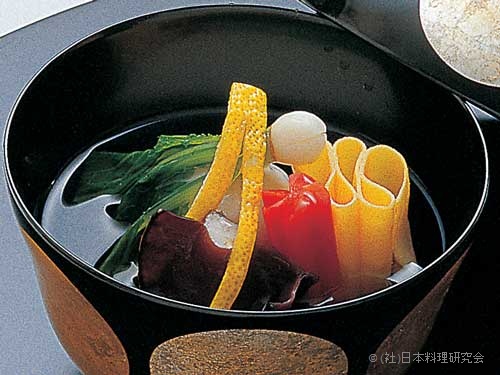
This is the soup course. On New Year's morning, the water drawn fresh from a clear spring to make ozōni, New Year's mochi soup, is called 'young…

Kotaro Sugiura
For the grilled dish, the eel ichimatsu: burdock and carrot are cut into thick strips and sautéed kinpira-style with a sweet-savory seasoning, then…

Restaurant Maki
Yukio Takahashi
The Orido eggplant used in the simmered dish course is from the Orido district of Shimizu — the eggplant Tokugawa Ieyasu was said to have especially…

Rakantei
Tadayoshi Fujiki
For the simmered course's spring daikon and lotus-root mochi simmered with shirozake: this time I used sake lees to let it soak in the seasoning…

Masami Watanabe
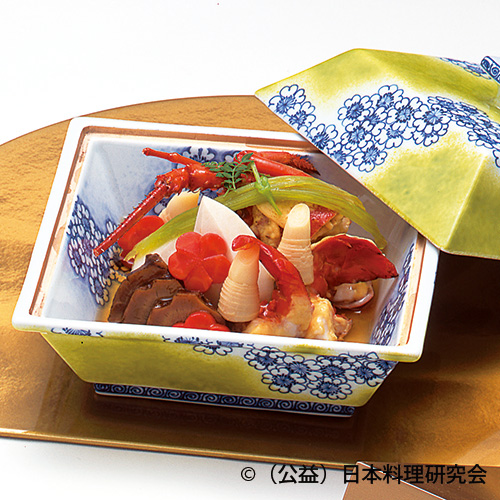
Moving on to the simmered dish course. For the tender Ise lobster oranda-ni with egg yolk, Ise lobster that has just molted is frozen whole, then…

Hattori Nutrition College
Mirai Hiratsuka
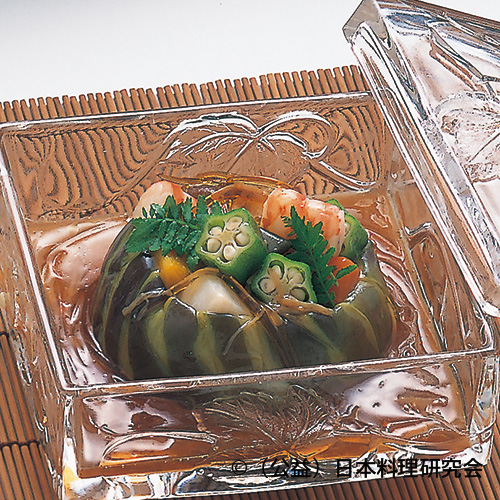
The chilled simmered assortment is Kamo eggplant age-dashi. Into deep-fried Kamo eggplant are packed saimaki prawns, pumpkin, carrot, shiitake…

Yuta Yokoyama

Tatsuo Kato
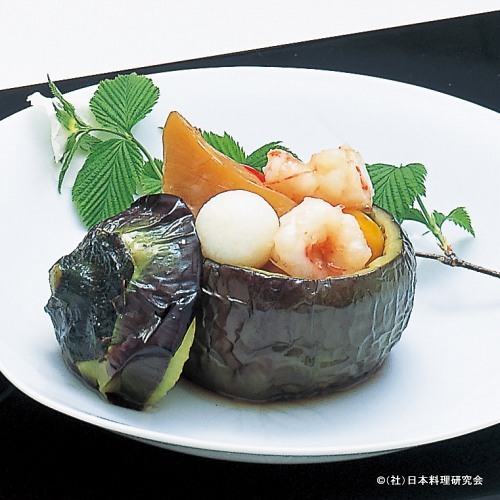
Last is the additional course. This one takes its cue from Chinese cooking. I've turned a round eggplant into a bowl. For the shark fin, I finish it…

Masaki Aomatsu
The oyster and napa cabbage roll is another dish well suited to large-quantity cooking. Kinu-kōya is made by blending koya-dofu (freeze-dried tofu)…

Yasutaka Miura
The simmered sea bream and turnip is a fairly common preparation, but this time I combined sea bream and turnip together. I wrap sea bream around a…

Umeo Kamikanda
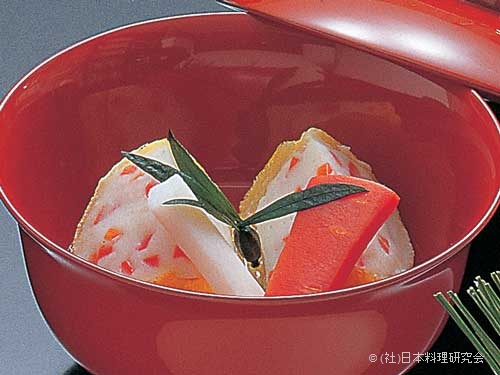
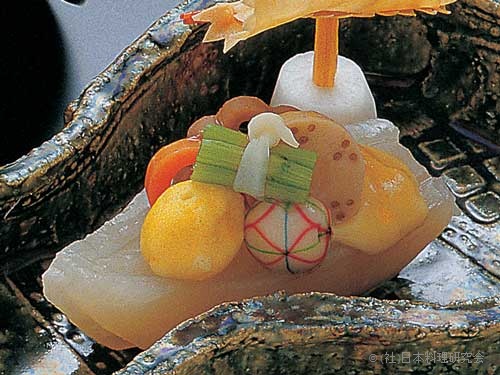
The assorted simmered dish is a menu conceived around the image of the Seven Lucky Gods. Since it's New Year's, I added a playful touch by decorating…

The New Okura
Toru Kato
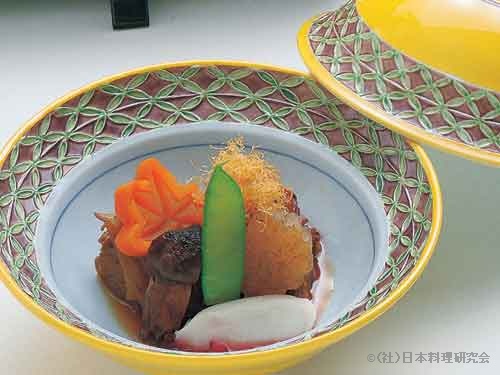
The simmered course is simmered tuna throat meat. This throat meat can only be taken as a single piece from an entire tuna, so it rarely appears on…

Tsukiji Tamura
Takashi Tamura
(A drink shared over delicacies for the twelve zodiac animals, looking back on the year — all of it gentle on the body and low in calories.) We have…

Izu Nagaoka Onsen, Kameya Keian
Yoshihito Sato
The small hot pot is monkfish simmered in miso. As usual, the monkfish is filleted and cut into its component parts, given a firm quick blanch…

Kenji Naruke
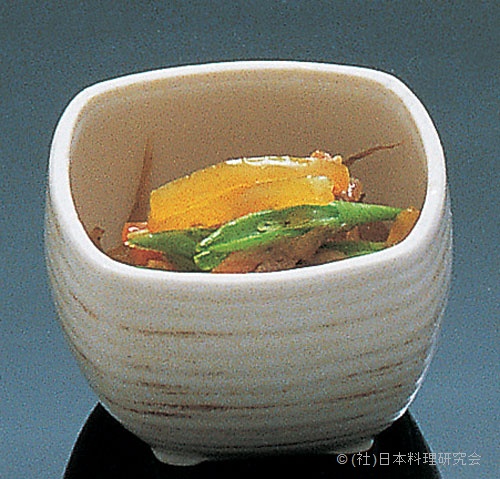
This simmered course is one I make often in this season; everything is simmered in a light happō dashi (all-purpose seasoned dashi).

Japanese Cuisine Yamauchi
Toshihiko Yamauchi
●Abalone hiryōzu, a deep-fried tofu fritter: a hiryōzu batter is made from tofu, combined with abalone that has been steamed with sake and cut up…

Koji Yoshida

Yoshiaki Enomoto
Showing 24 of 289