Read the article: Corn Tofu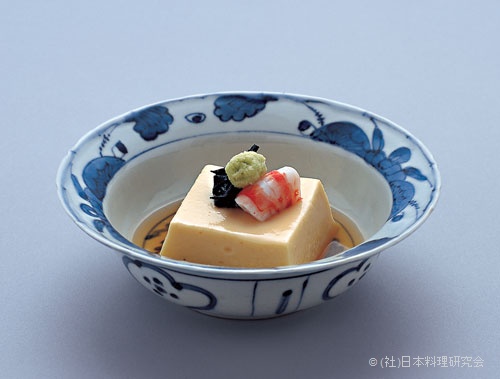
Ginza Kasuga
Takao Shimada
Corn Tofu
At our restaurant, the appetizer course is normally served as three items: something plain like tofu, something briny with a bit of a kick to go with…
Seafood & Seaweed
Ginza Kasuga
Takao Shimada
At our restaurant, the appetizer course is normally served as three items: something plain like tofu, something briny with a bit of a kick to go with…
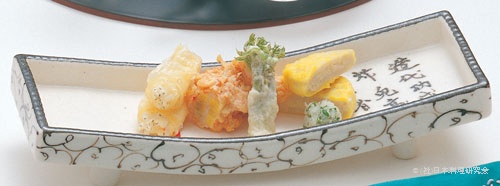
Hideo Kumagai
The fried course's renkon kimi-age wraps grated lotus root and yamato yam in a lotus root slice and deep-fries it in egg yolk batter; this time I've…
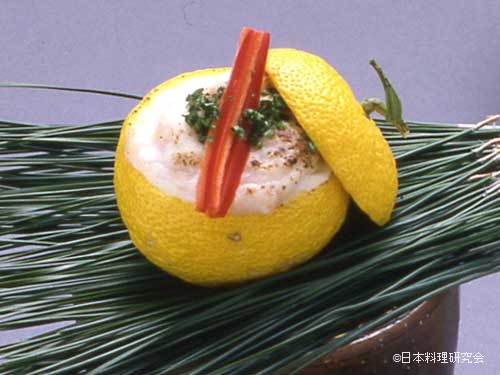
Hotel Midori Iwaki Ueda Shikisai Shokumidori
Yasuyuki Koike
For the appetizer, I used yuzu sent to us in large quantities from our affiliated kappō ryokan in Fukushima; since it would be a waste to use only…
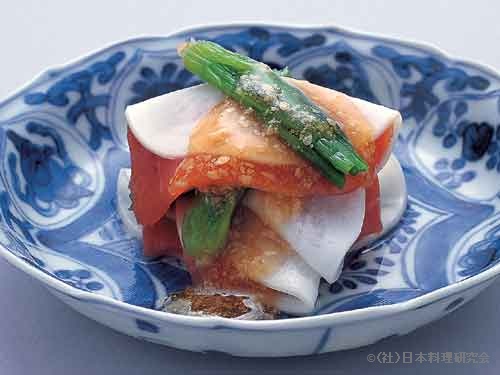
Ginza Kasuga
Takao Shimada
This time it's a vinegared dish, but at our restaurant we don't force one into every menu — we serve it within the appetizer, or bring it out for…
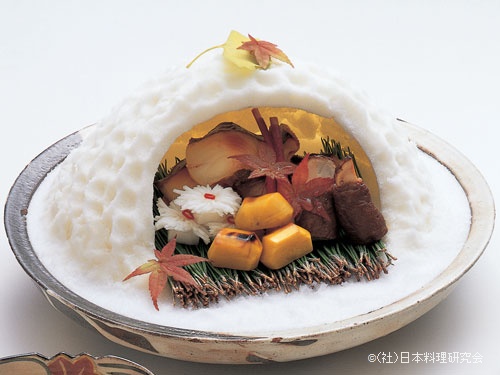
Katsuo Inoue
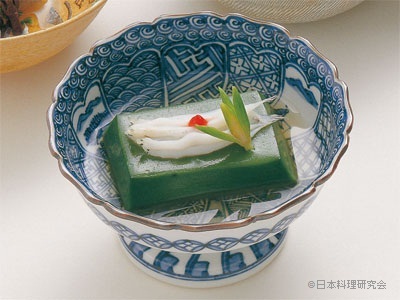
Tsubaki
Tadanori Igarashi
For the mugwort tofu, we ladle in a delicious dashi broth, top it with sake-steamed icefish, and try to bring out the fragrance of spring.
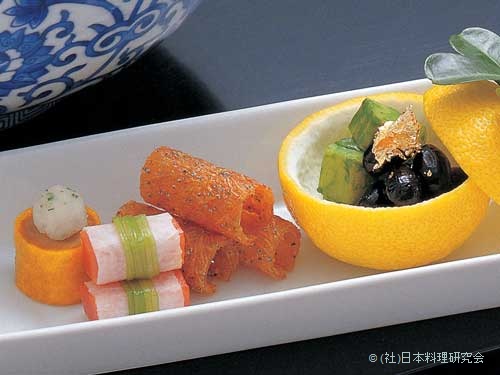
Yasutaka Miura
For the tatami iwashi yatsuhashi, I spread a thin layer of shrimp fish paste onto the tatami iwashi, a sheet of dried baby sardines, roll it around a…
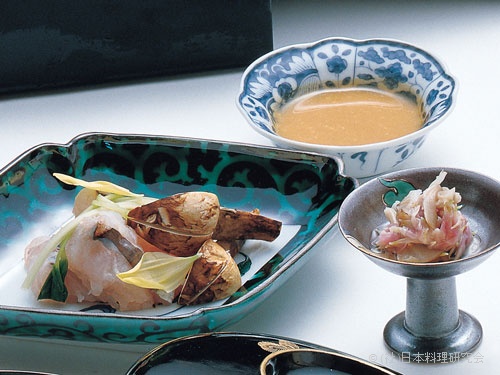
Shingo Yoshida
The New Okura
Toru Kato
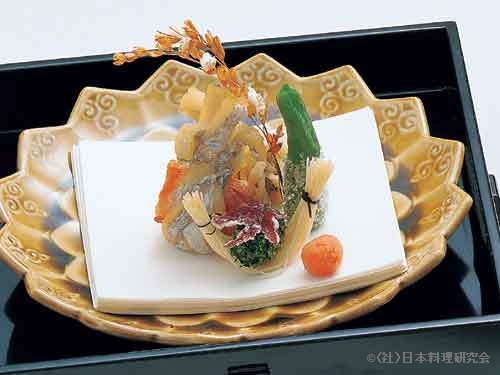
The fried course's basket somen is made by gathering somen noodles into a basket shape and deep-frying them plain (su-age).
Shiro Ogawa
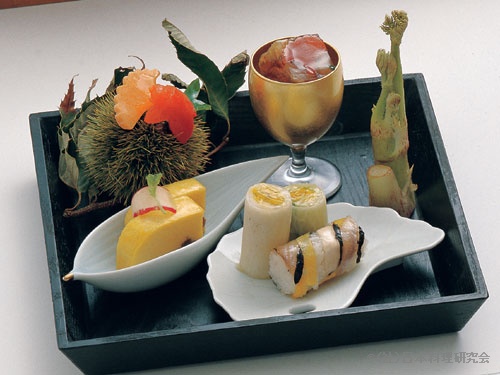
For the appetizer's kasutera shinjo, raisins are reconstituted in wine beforehand so their color doesn't fade. The ingredients are combined, poured…
Wataru Saito
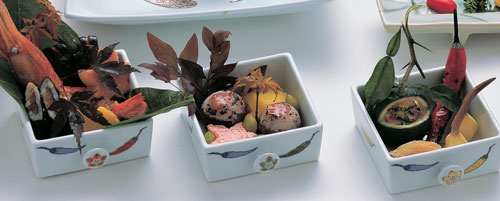
Our guests are mostly somewhat older women visiting on pilgrimage during the day, and business parties such as client entertaining in the evening…
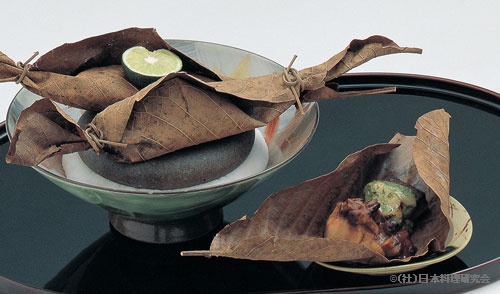
Yutaka Sato
Toshiaki Asano
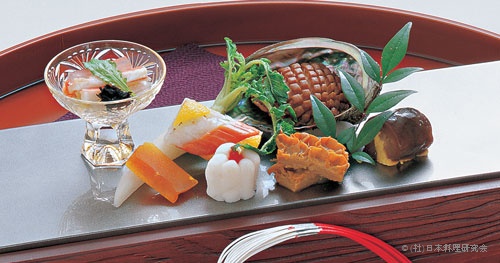
For the celebratory course's pine cone abalone daisen-ni, I score a small abalone into a pine-cone pattern, then rehydrate it for about six hours in…
Hideki Nakagawa
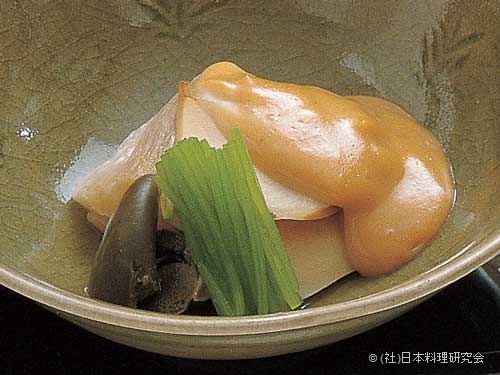
Steamed abalone with white taro stem and stem mitsuba tossed with peanuts is designed to be mixed together by the guest's own hand. The abalone liver…
Toru Kimura
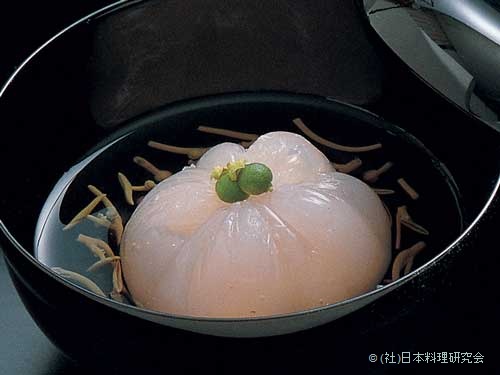
The soup course is pike conger mizu-botan. Mizu-botan is a season word for July, and it's also well known as a summer wagashi — white bean paste dyed…
Shoichi Kenmotsu
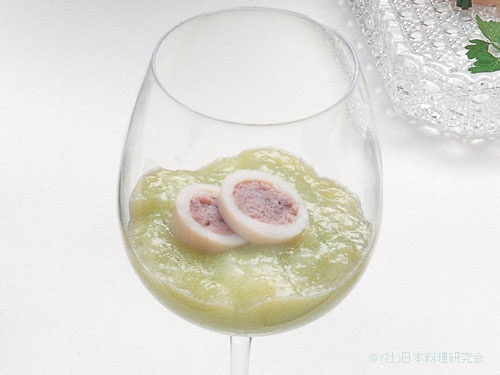
The appetizer's edamame surinagashi might stray a little from traditional Japanese cuisine, but this is the form I serve it in. Today I made it a bit…
Morio Imaizumi
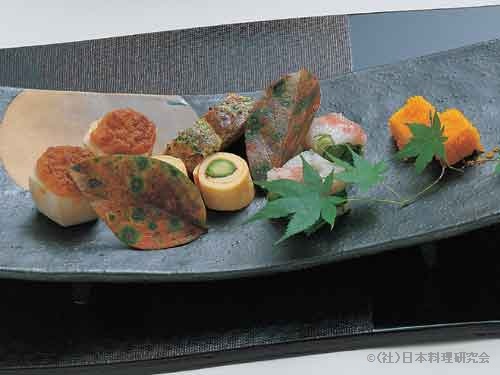
The appetizer's quail with Japanese chives is made by butterflying the quail open into one flat piece, spreading ground chicken on the thinner part…
Katsuaki Sugimoto
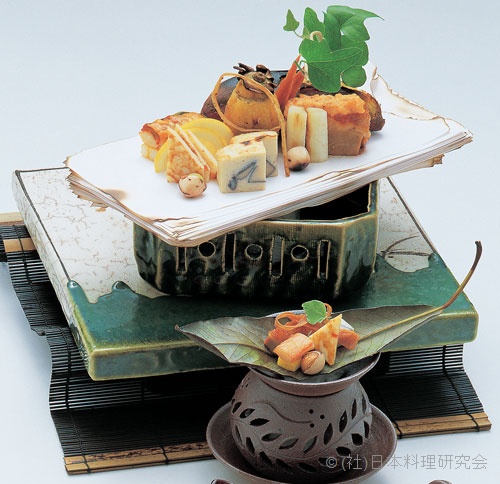
As for the stone-wall-style grilled shinjo among the grilled dishes: we peel Ishikawa taro, a satoimo cultivar, coat it in squid ink, and let it rest…
Fumio Uyama
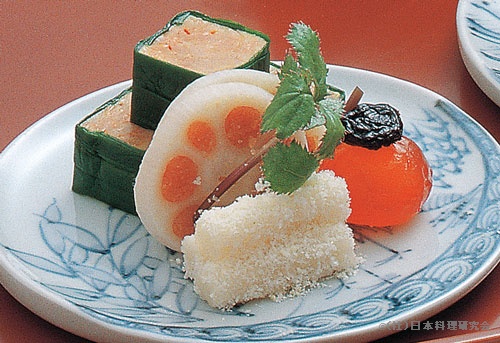
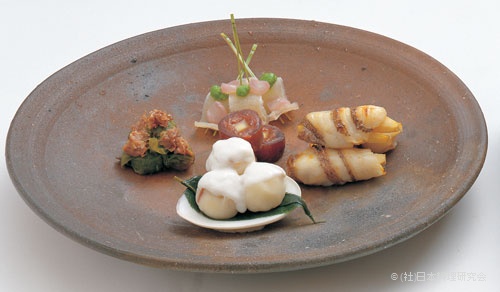
For the appetizer course's miso-and-sake-lees-cured ankimo wrapped in green onion, I remove the thin membrane from the monkfish liver, soak it in…
Shonaisho
Koji Kudo
For the large-plate course, the freeze-dried konjac narazuke: slice the konjac thin, freeze it into shimi-konnyaku, then thaw it and turn it into…
Tatsuya Nakayama
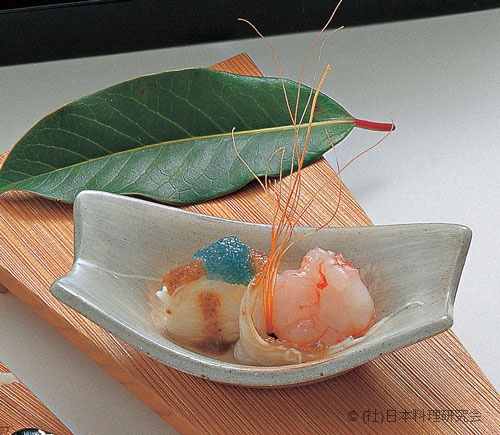
For the okina yam with sweet-shrimp shiokara: I cut Japanese mountain yam into somen-noodle-thin strands, then toss it with sweet shrimp shiokara…
Kiyoshi Matsuoka
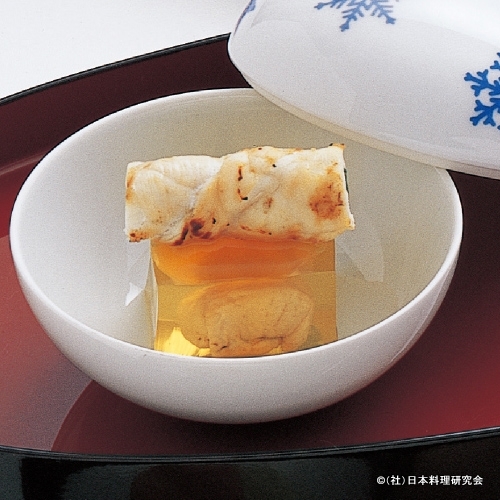
For the grilled shirako set in jelly, today I finished it with a ponzu-thickened sauce, but the currently trendy ponzu gelée would also work nicely.
Kiyoshi Yokoi
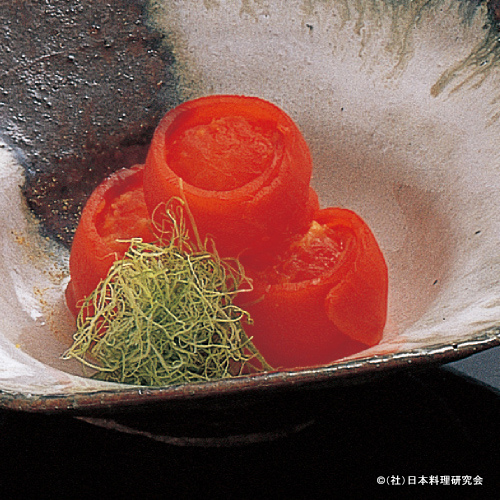
For the mustard vinegar, combine one part sweet mirin vinegar with two parts kombu dashi, add an appropriate amount of Japanese mustard, and finish…
Showing 24 of 810