Hideo Kumagai
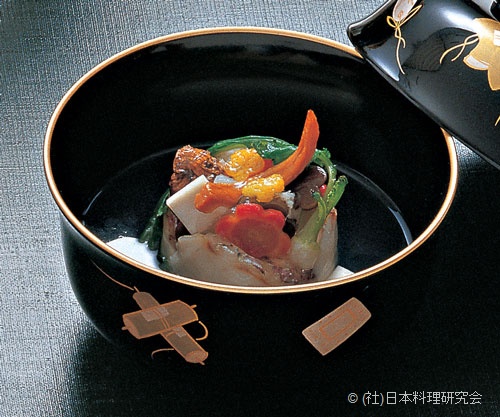
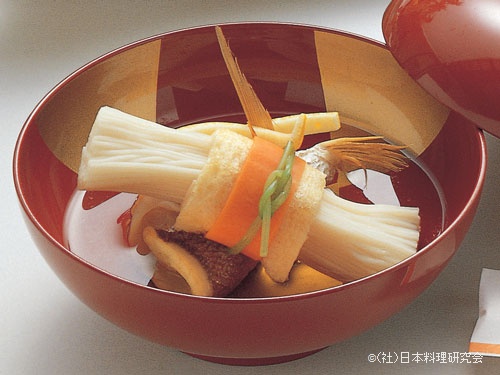
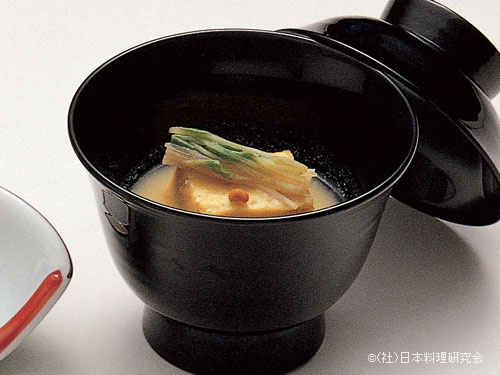
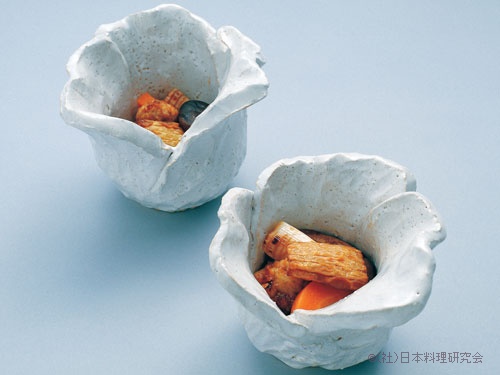
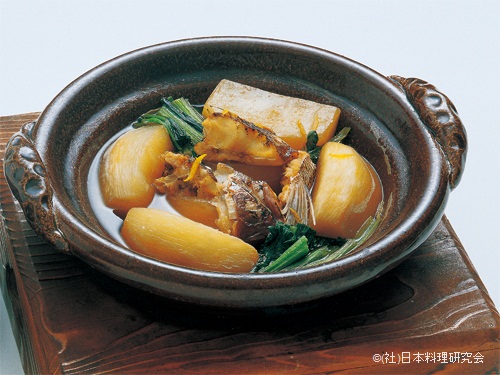
Conger eel deep-fried tofu fritter with vegetables, simmered in a spring daikon soup
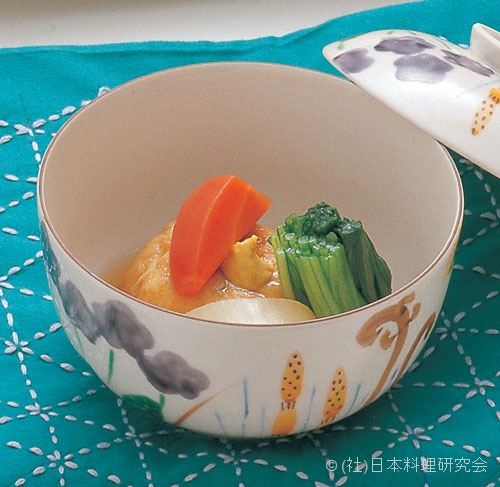
This is a takiawase, a simmered assortment, and guests staying at the inn tend to have strong likes and dislikes. So I've kept it a simple simmered…
Vegetables & Fruits

Hideo Kumagai
This is a takiawase, a simmered assortment, and guests staying at the inn tend to have strong likes and dislikes. So I've kept it a simple simmered…

Mabuchi Shoji Co., Ltd.
Hidematsu Matsuura

Mabuchi Shoji Co., Ltd.
Hidematsu Matsuura
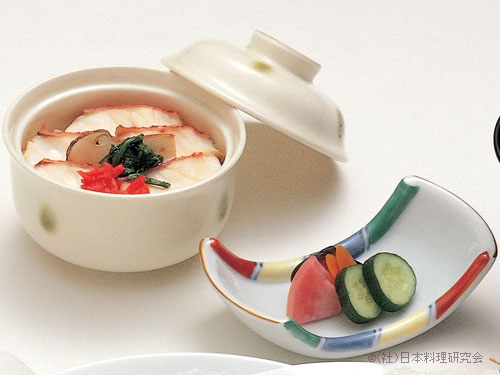
For the simmered course's baby octopus simmered sakura-style: I don't simmer the baby octopus until firm — instead I quickly blanch it and let it…

Toshiaki Omori
I made it as a clear soup relying on the ingredients' own flavor rather than dashi, but since I thought it might taste a bit fishy together with the…

Mitsuo Ito
For the sea cucumber and spinach, I think the sea cucumber is more delicious with a nice crunch if you cut it a bit on the thick side.

Tokyo Kaikan Mitsukoshi Co., Ltd. Nihonbashi Sales Office
Sumio Udagawa
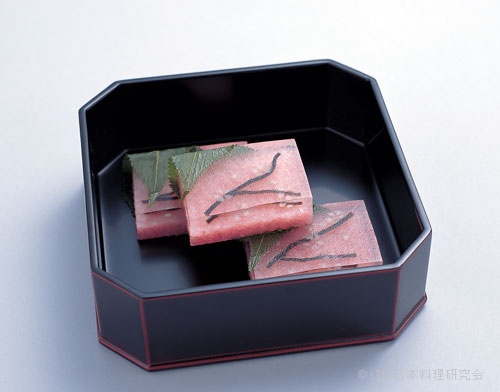
Domyoji sakura-kan is a cherry-pink domyoji jelly topped with a decoration meant to evoke the scent of cherry blossoms and the image of a cherry…

Toshiaki Asano
For the clear-soup course's hanabira mochi, I knead rice flour with a little potato starch in lukewarm water, cut it into ovals with a mold, and tuck…

Odawara SAKANA CUISINE RYŌ
Eiji Maruko
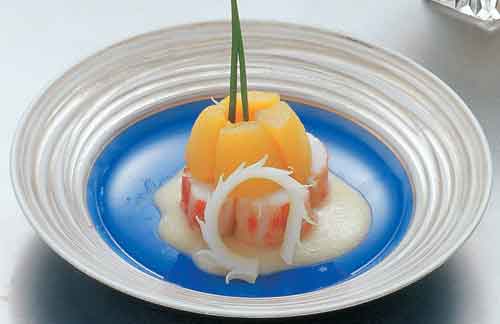
For the crab yamabuki, we use Japanese spider crab that is often landed in Sagami Bay. The tart Okinawan citrus used to keep the loquat from…

Katsumori Ashizawa
For the yuzu-scented grilled sea bream, the sea bream is filleted into three pieces as usual, then marinated for about 20 minutes in a marinade made…

Tokyo Kaikan
Naoto Suzuki

Koji Tsukino
The Nankan somen used in the simmered-bowl course is a specialty of this region — hand-stretched in the traditional way, it has a firm bite. It's a…

Yasuo Omiya

Yasuo Omiya
For the rice course, I added two slices of pickles per guest. In honzen cuisine (formal banquet-style dining), odd numbers are the formal rule for…

Teruyuki Sugita

Kazuo Ozaki
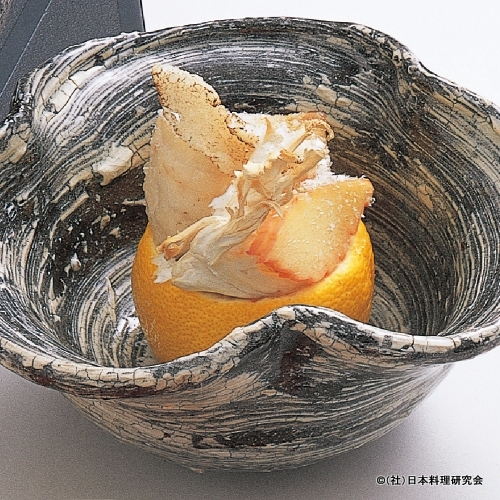
For the bundled matsuba-gani, I've cut it on the diagonal, since cutting it straight would make it look like a plum blossom — though in winter…

Yukinori Nishikawa

Kiichiro Nonaga
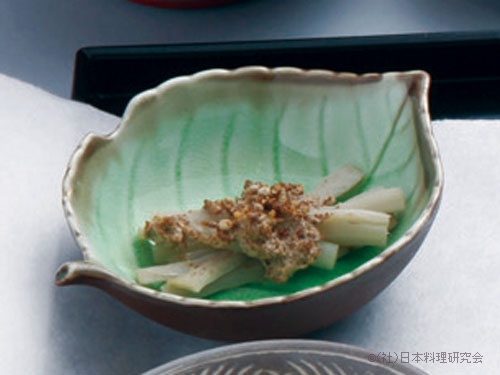
Shinagawa turnip is a white, elongated turnip about 15 cm long. Its flavor is unassuming and simple, without a strong character of its own. In the…

Ginza Kasuga
Takao Shimada
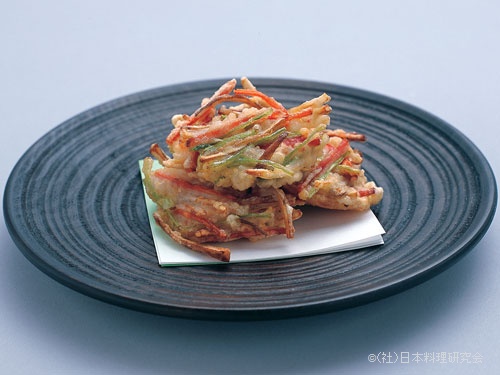
For the burdock, mitsuba, and carrot kakiage with a twist, we kept the texture by coarsely mincing small kuruma prawns by hand. Besides deep-fried…

Kappo Nihonbashi Toyoda
Toru Hashimoto
For this appetizer (sakizuke) of konoko-kake, I cook it simply, in a way that brings out the flavor of the ingredient itself.

Rokusaburo Michiba
For tai-kabura, the sea bream head is more delicious when it carries a certain richness of flavor, but that richness would be a bit too heavy for the…

Ginza Asami (Michelin selected)
Kenji Asami
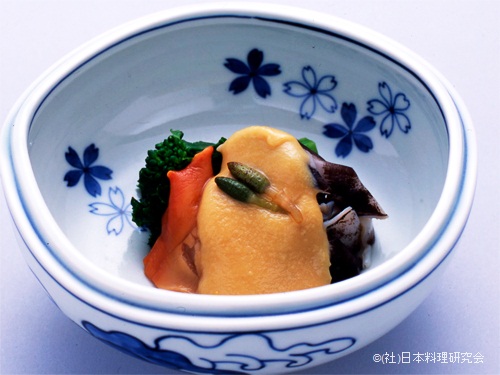
Ark shell, cockle, and rape blossom teppai is a dish dressed in vinegar-miso; it normally uses scallions, but here we used rape blossoms instead.

Nobuyoshi Doi
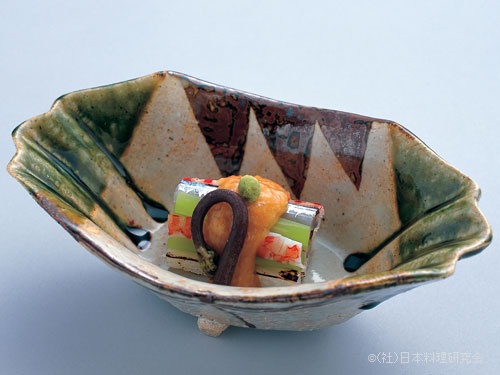
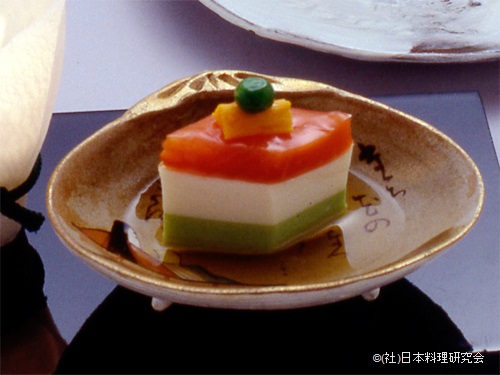
For the appetizer, I consciously incorporate seasonal ingredients that evoke that time of year. Atop the three-colored mold of wild mountain…

Ginza Hikari
Toshiyasu Tsunoda
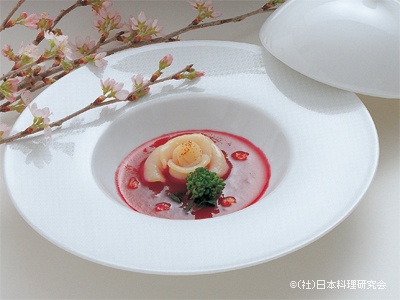
The "Red Soup" for the soup course serves as a substitute for the clear soup. We actually serve it at the restaurant, and it's quite popular — it…

Tsubaki
Tadanori Igarashi
For the grilled course, the yamame trout and butterbur miso gyoden-yaki is made using a mukimono knife (a thin blade used for decorative vegetable…
Showing 24 of 910