
Read the article: Wakasa-style grilled tilefish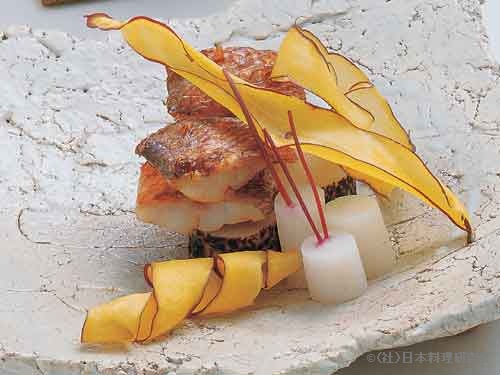
FREE
Masao Fujimura
Wakasa-style grilled tilefish
For the yakimono tilefish wakasa-yaki, the tilefish is wind-dried, brushed lightly with light soy sauce, and grilled over a distant flame so the skin…
Fish
FREE
Masao Fujimura
For the yakimono tilefish wakasa-yaki, the tilefish is wind-dried, brushed lightly with light soy sauce, and grilled over a distant flame so the skin…
Yukinori Nishikawa
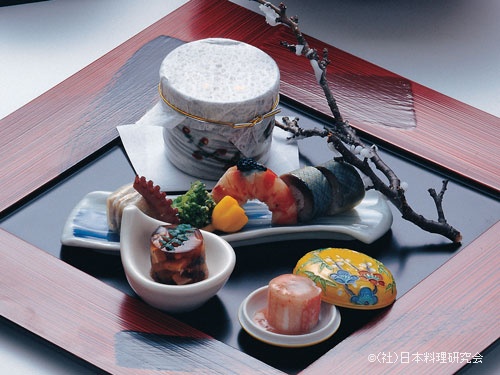
For the appetizer course's foie gras chawanmushi, the foie gras is broken up into pieces before being used.
Hajime Kimura
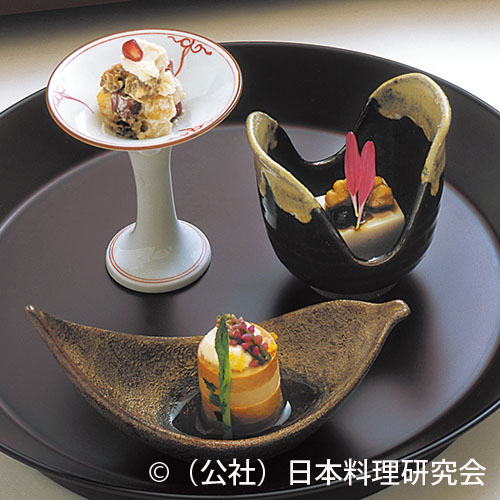
This is the appetizer course. Ideally, monkfish liver is best served simply steamed, but after two or three days its fattiness starts to smell, so at…
Yasuhiro Ohashi
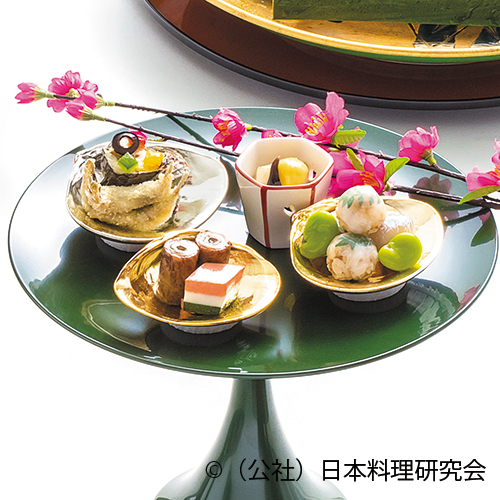
Toshikazu Kurosaka
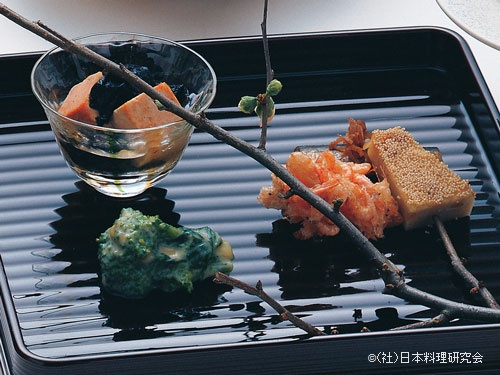
Steaming the beef loin and fuki roll once beforehand makes it easier to hold together, allowing the work to go smoothly. When preparing a large…
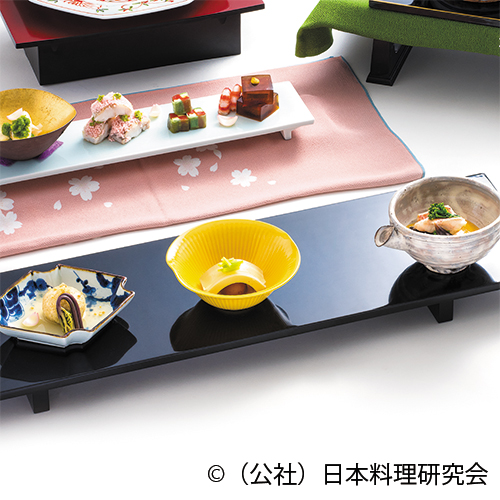
Kameya Issui-tei
Koki Osa
Since I work at an eel restaurant, I wanted to include one eel dish, so I put eel and millet manju in the appetizer. To that I added bracken as a…
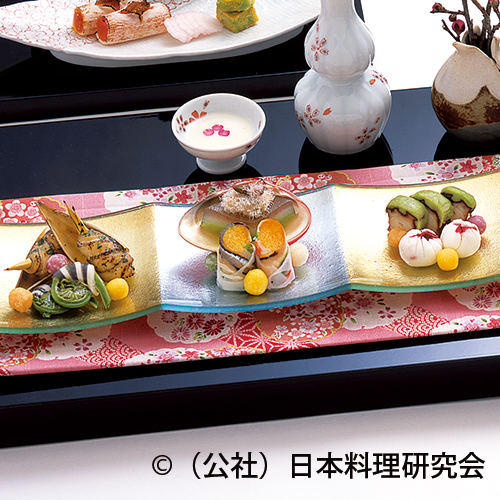
Yoshiaki Sato
And thinking of bamboo shoots in the spring hills and fields, we have the bamboo shoot and fat greenling grilled with sansho leaf. Cogomi rikyū-maki…
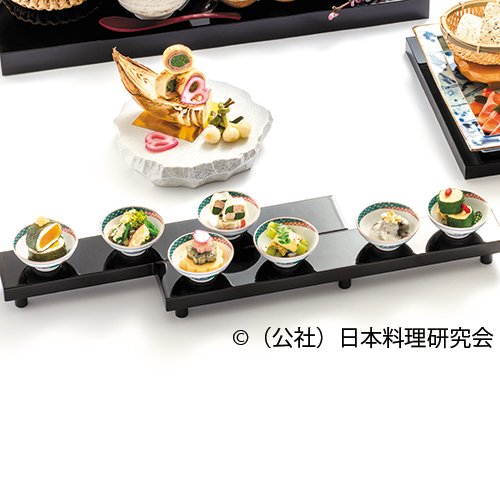
Yumoto Kamiyamada Hotel
Tetsuo Komamura
Let's begin with the appetizers. For the Shinano yukimasu ogawa roll wrapped in nozawana, ogawa is normally made using minced squid or white fish…
Japanese Cuisine Hana Micho
Taku Namai
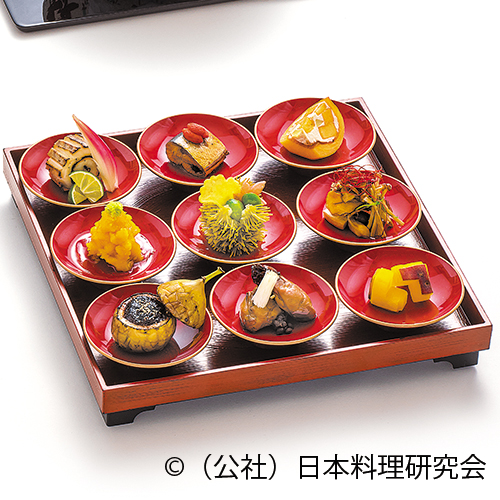
This is a nine-item appetizer assortment. For the soba-gaki-style tamba-mushi, the sweetness of the chestnuts varies considerably by season, so the…
Isenishiki
Kaname Watanabe
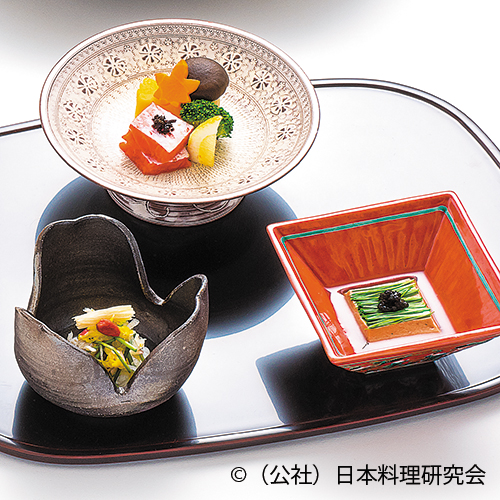
Starting with the appetizer course, the sockeye salmon confit. Confit refers to low-temperature cooking; to keep the salmon tender, it is cooked at…
Kazuhiro Yamada
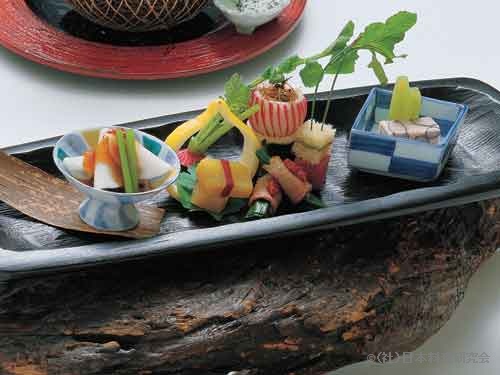
The appetizer's turnip with monkfish liver in ponzu sauce is made by sandwiching kombu-pressed turnip around steamed monkfish liver, pouring ponzu…
Waketokuyama
Hiromitsu Nozaki
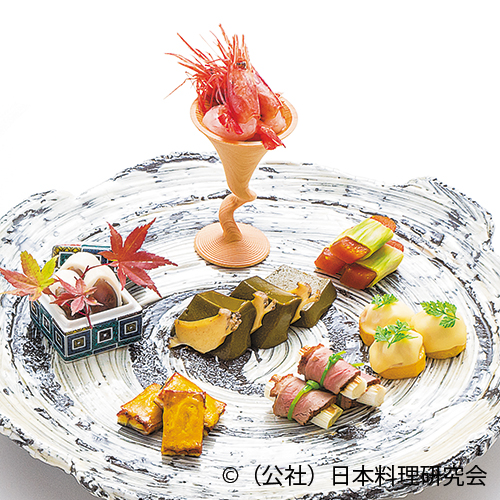
Isenishiki
Kaname Watanabe
Starting with the tray course, the abalone uro tofu. Uro refers to the liver; we use abalone liver saved from summer and set it with gelatin. For the…
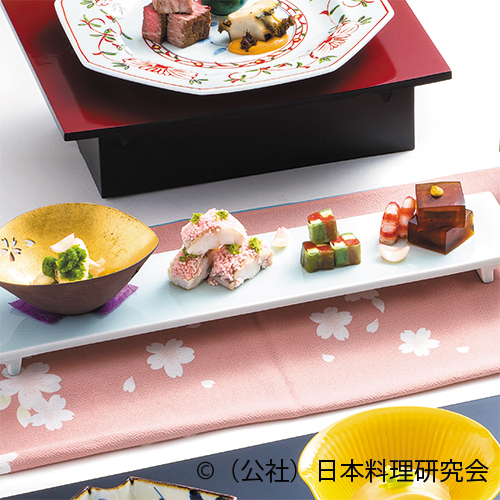
Kameya Issui-tei
Koki Osa
This is the grilled-dish hassun course. For the Wakasa flounder with kinome vinegar, I grind kinome in a suribachi mortar and mix it with grated…
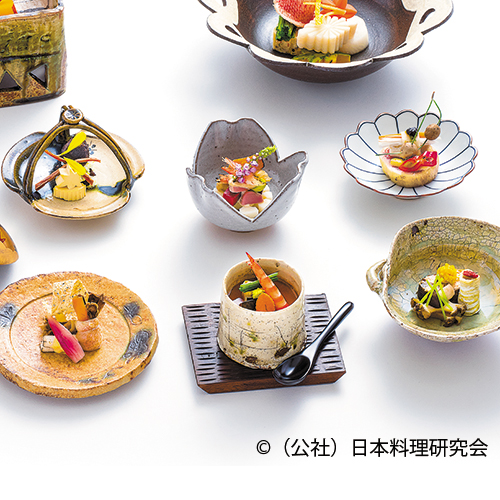
Kappo Shimamura
Yoshimasa Aoyama
This is a six-item small-bowl course. The salt-cured pork thin-skin roll: the method for making the salt-cured pork was based on Okinawa's sūchikā…
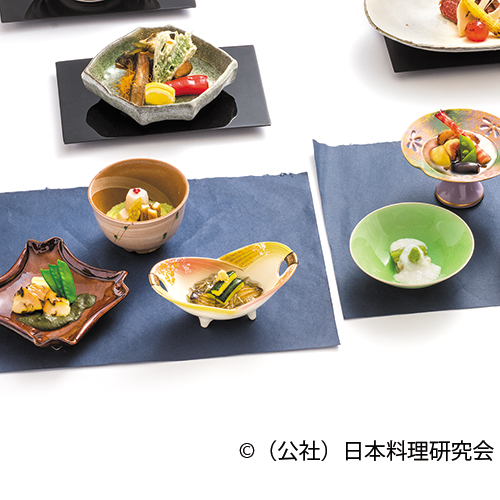
Kappo Miyamoto
Fumiaki Miyamoto
This is the sakizuke course, an appetizer. The fig is peeled of its thin skin and steamed briefly to soften it. The eggplant is deep-fried in oil…
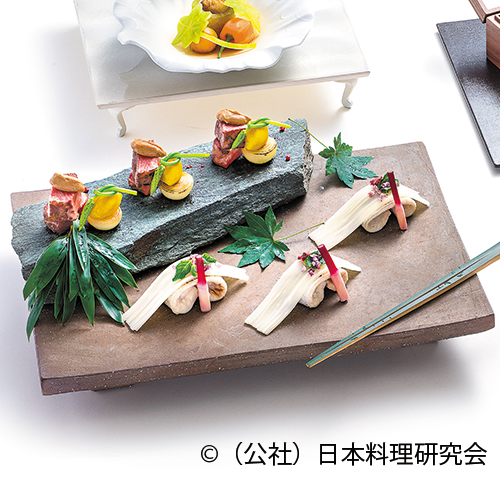
Hotel The Manhattan, Japanese Cuisine Origin
Jun Goto
The fish dish is barracuda and udo kinpira, Takigawa-style — a summer presentation with clear kuzu strands suggesting flowing water. Since it was…
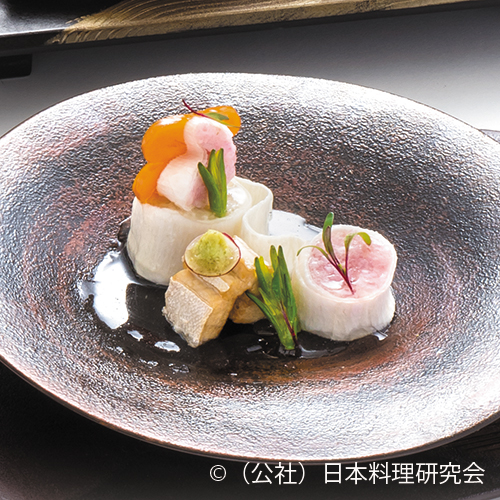
Japanese Cuisine Yoshimura
Koichi Tomizawa
This is the yaki-hassun — a grilled hassun assortment, written with celebratory kanji. For the Winter Moroko, Simmered and Marinated, I use moroko (a…
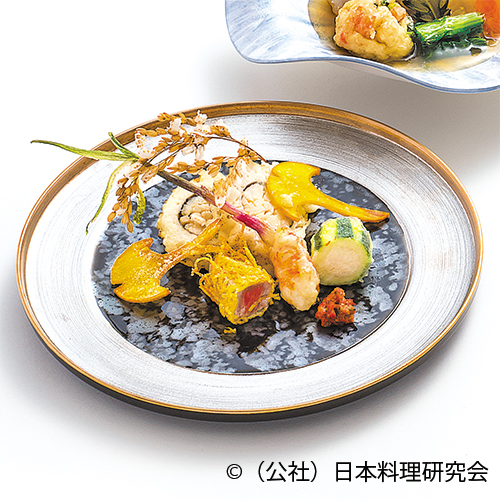
Hotel New Otani Makuhari Senbazuru
Satoshi Higuchi
This is the deep-fried course. For the late-season pike conger and matsutake goshoguruma-age — a style in which the roll is sliced to reveal a spiral…
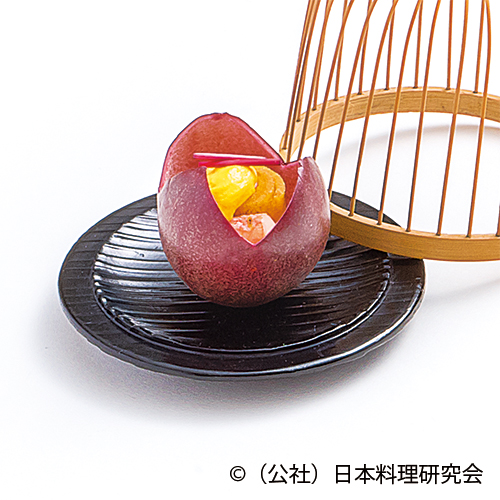
Nishiazabu Ichino
Yuji Shimizu
This is the vinegared course (sunomono). For the mackerel kinuta-maki — rolled around a filling in a shape named for a fulling block — the mackerel…
Toshikazu Kurosaka
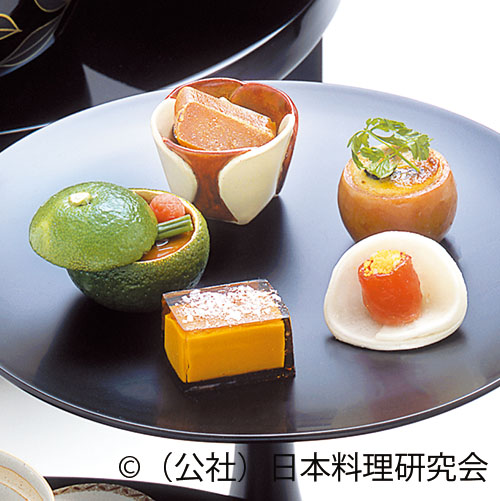
This is the appetizer course. For the seared bottarga, we first wash the mullet roe sacs thoroughly in salted water, then rinse away the blood…
Hotel The Manhattan, Japanese Cuisine Origin
Jun Goto
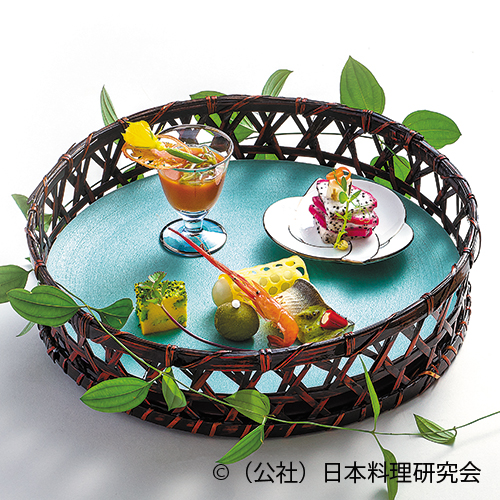
This is the appetizers course. For the tomato jelly, we use tomato juice brought in from Iwamizawa, Hokkaido. The ratio is 1g of French gelatin per…
Shotokan
Ryoichi Imayoshi
Ise-sada Main Store
Kizo Oikawa
Showing 24 of 1,016