Read the article: New Pea Rice Porridge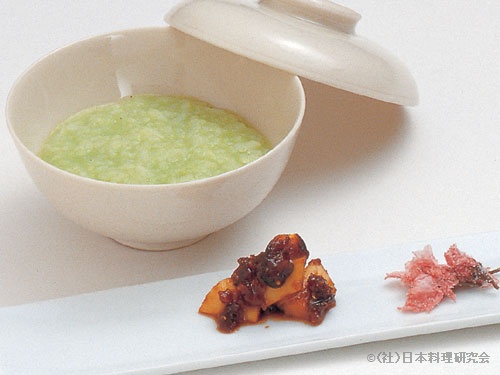
Shinbashi Kanetanaka
Noboru Matsumoto
New Pea Rice Porridge
For the rice course's new pea rice porridge, since rice grains and peas differ in shape, size, and texture, I made this with the idea of simply…
Potatoes and root vegetables
Shinbashi Kanetanaka
Noboru Matsumoto
For the rice course's new pea rice porridge, since rice grains and peas differ in shape, size, and texture, I made this with the idea of simply…
Shinbashi Kanetanaka
Noboru Matsumoto
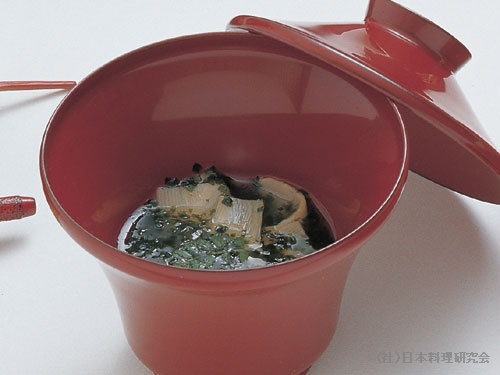
For guests who are drinking sake, filling up on soup means they can't drink as much, yet they still want some soup somewhere along the way. With that…
Akio Saito
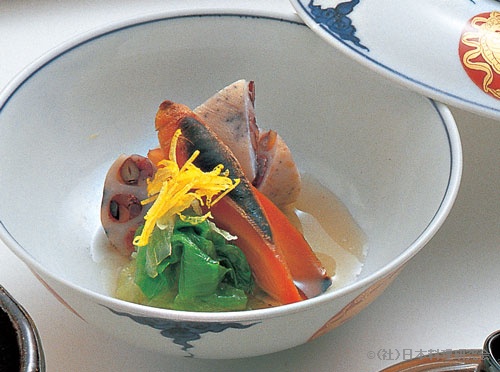
Shokuyo cuisine — called macrobiotic in the West — doesn't mean giving up fish and meat; it means eating in balance. We also follow the principle of…
Akio Saito
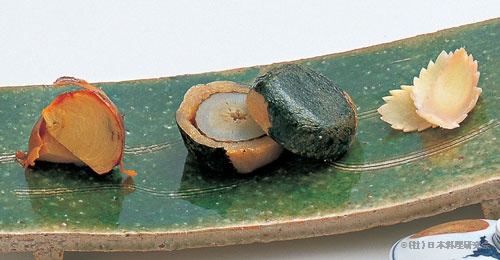
Shokuyo cuisine — called macrobiotic in the West — doesn't mean giving up fish and meat; it means eating in balance. We also follow ichibutsu-zentai…
Katsuaki Sugimoto
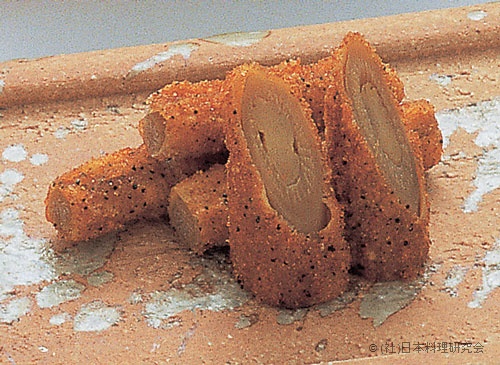
For the tube-cut burdock coated in shrimp powder, we dry and toast tiny opossum shrimp, grind them finely in a mortar, pass them through a sieve…
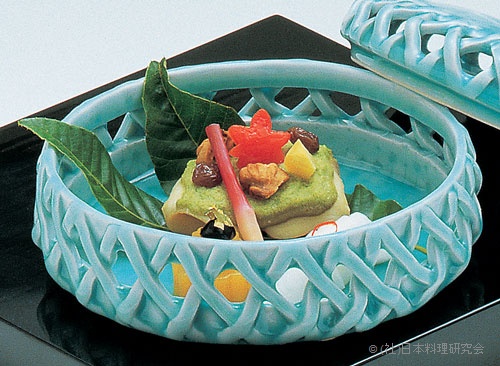
Kioicho Kissho
Shigemitsu Shimizu
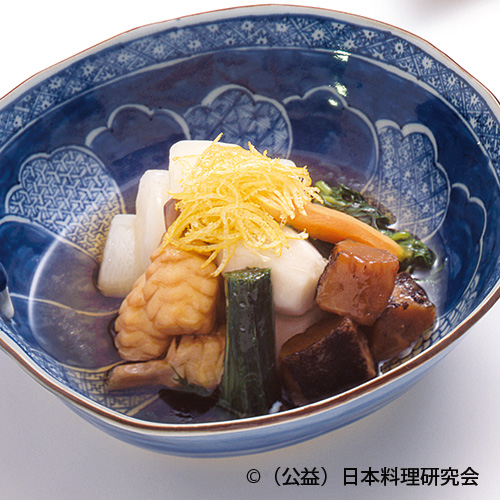
Hidekatsu Shoji
This is the bowl course. For the bōdara inaka-ni: the dried cod is soaked in rice-rinsing water for about two days to rehydrate it, cleaned, wrapped…
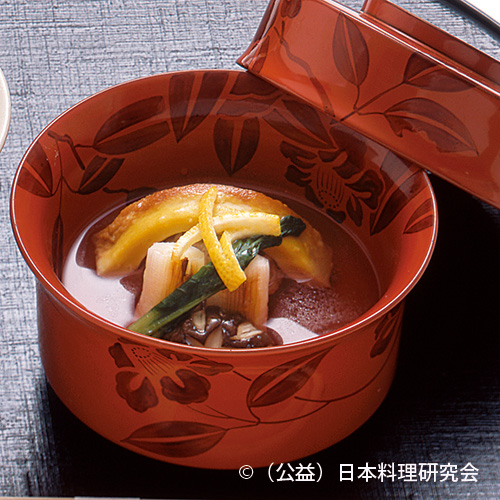
Hidekatsu Shoji
This is a clear-soup style dish, with duck dumplings, grilled scallion, shiitake mushroom, grilled millet-gluten cake, and pine-needle-cut yuzu as…
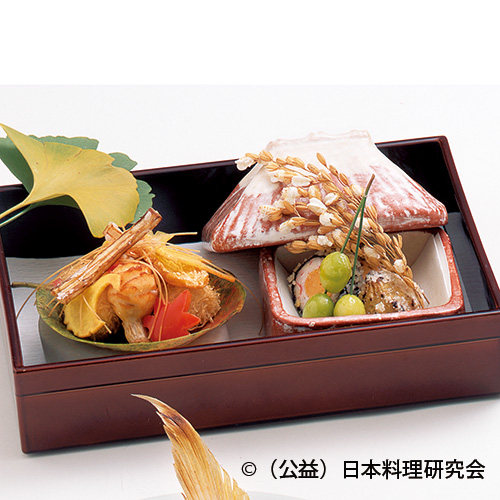
Mitsuo Ito
For the fried course, crab hōnen-age: steamed sea urchin is placed inside, wrapped in crab, then wrapped again on the outside in nori, lightly seared…
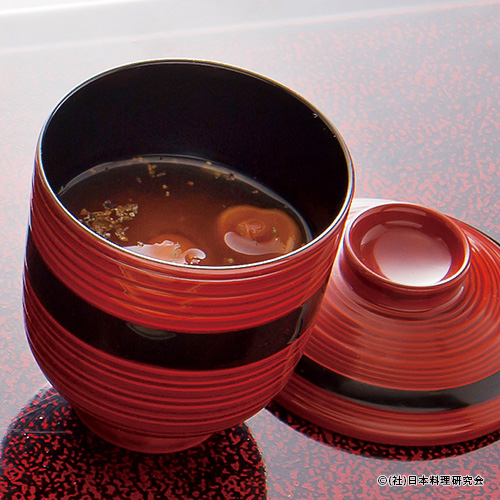
Tokyo Airport Restaurant
Hiroshi Nagashima
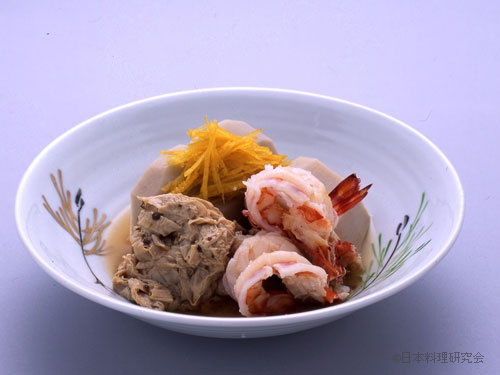
Ginza Asami (Michelin selected)
Kenji Asami
Daichūji imo is a taro grown at Daichūji temple in Numazu; it's considerably larger than ebi-imo taro, and it's packed solid all the way through…
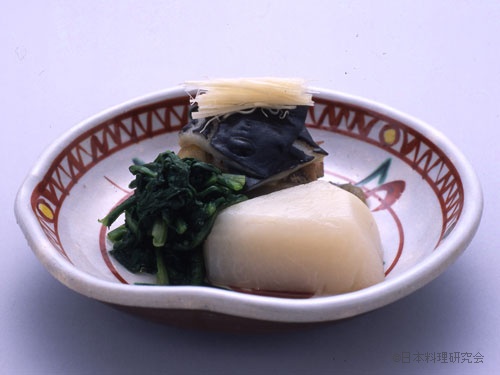
Ginza Asami (Michelin selected)
Kenji Asami
I was taught a preparation method for softshell turtle that removes any unwanted odor, and at customers' request I also serve it in place of the soup…
Akira Sakamoto
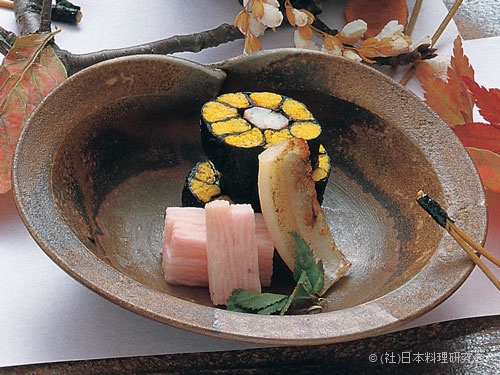
For the appetizer's crab chrysanthemum roll: to keep the nori from turning sticky, dry-roast it in a frying pan, rolling it around as you go — that…
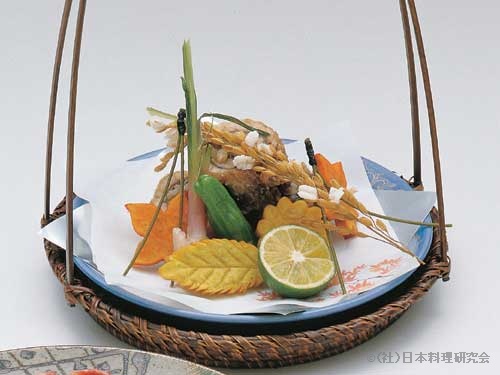
Sadaji Sato
This time, wanting to convey Yamagata's local ingredients to the whole country, I expressed Yamagata's four seasons — spring, summer, autumn, and…
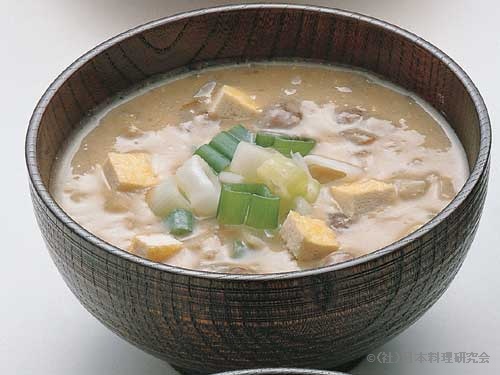
Sadaji Sato
This time, wanting to convey Yamagata's local ingredients to the whole country, I expressed Yamagata's four seasons — spring, summer, autumn, and…
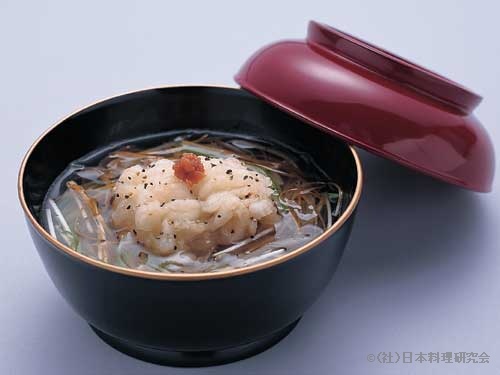
Ginza Kasuga
Takao Shimada
Sawani-jitate is versatile, so I use it throughout the year. Here I used nagori hamo, and I hear that in Ōita they eat hamo year-round; at our…
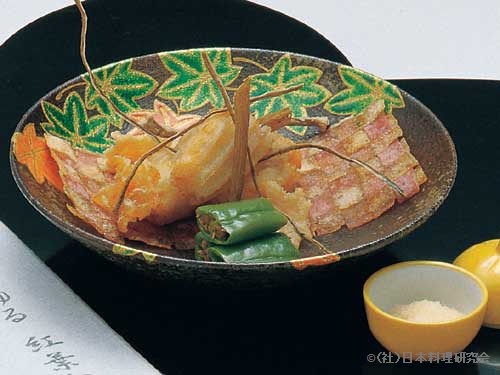
Tokyo Kaikan
Naoto Suzuki
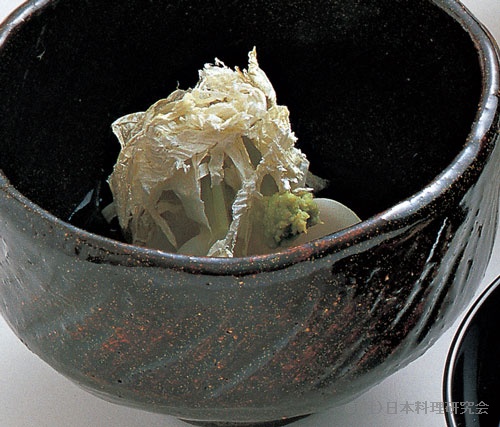
Akio Saito
Shokuyo cuisine — called macrobiotic in the West — doesn't mean giving up fish and meat; it means eating in balance. We also make it a basic…
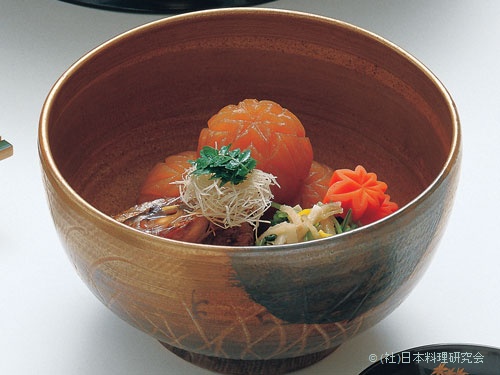
Toshihiro Kimizuka
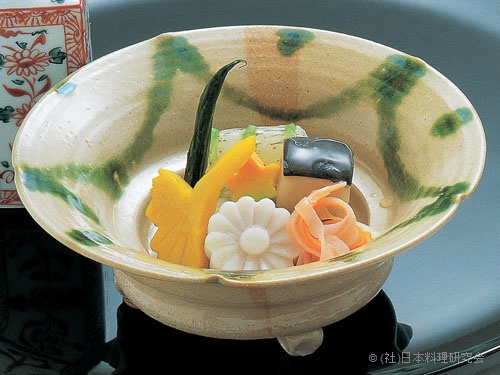
What I'd really recommend from the takiawase is the mibuna, chrysanthemum petal, and salted whale skin in a light, broth-based simmered dish. It's…
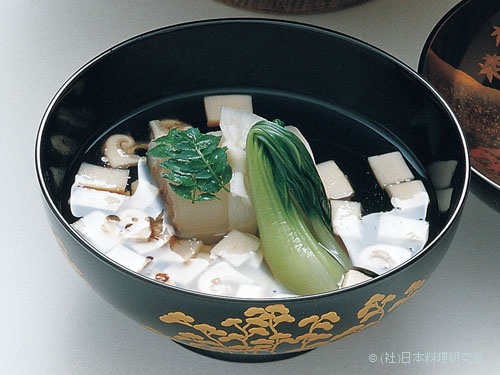
Toshihiro Kimizuka
The matsutake in the clear-soup course is chopped fine. This is something we've done since the previous master's (oyaji-san's) time — chopped this…
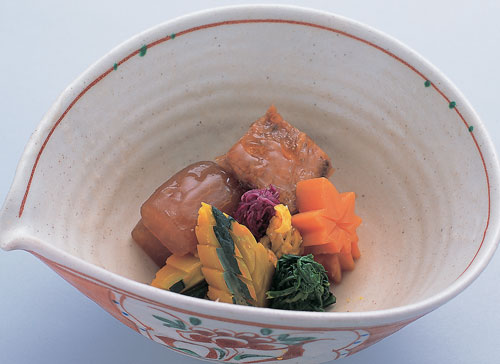
Hidekatsu Shoji
With the theme of the season turning from autumn into winter, we made three recommended dishes using ingredients of the moment. As the weather is…
Kioicho Kissho
Shigemitsu Shimizu
For the mochi-kujira — a fatty, gelatinous cut of whale prized for its chewy texture — and daikon, we used minke whale. Because the skin peels away…
Showing 24 of 869