Read the article: Crab and lotus root yose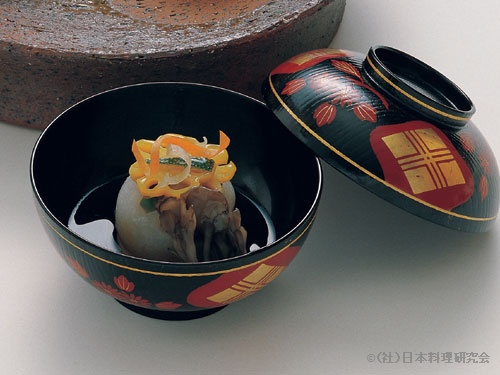
Shiro Ogawa
Crab and lotus root yose
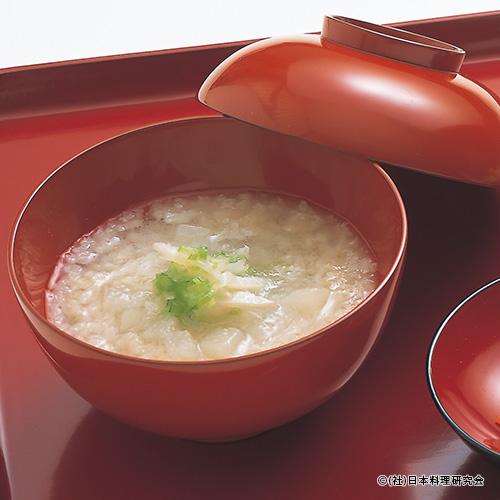
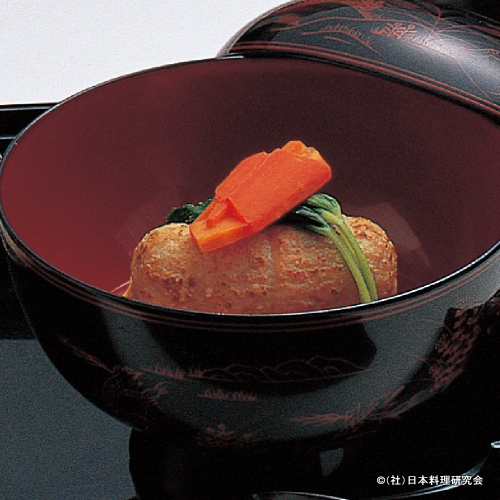
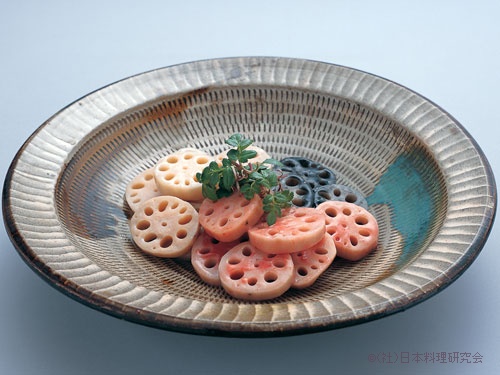
The soup course is a crab and lotus root yose. To keep the lotus root from discoloring, always soak it in vinegar water and then alum water. Boil it…
Potatoes and root vegetables
Shiro Ogawa
The soup course is a crab and lotus root yose. To keep the lotus root from discoloring, always soak it in vinegar water and then alum water. Boil it…
Rokusaburo Michiba
Kioicho Kissho
Shigemitsu Shimizu
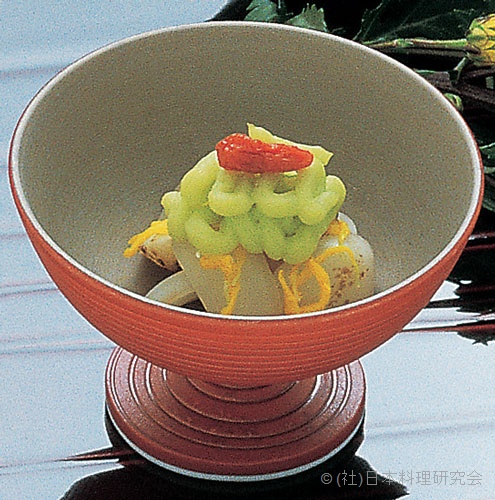
Think of the lily bulb and ginkgo nut salad as a variation on zunda-ae (mashed-edamame dressing). We salt-steam the lily bulb, let it absorb a thin…
Kioicho Kissho
Shigemitsu Shimizu
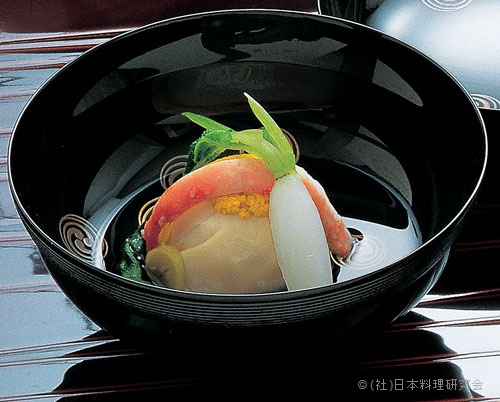
The clear-soup course is quail shinjo. Quail alone has a slight gaminess, so we combine it with ground chicken and add a small amount of sansho…
Akasaka Hikawa
Masaru Tanaka
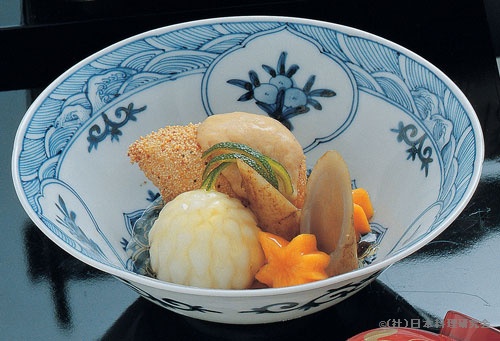
For the ebi-imo taro filled with duck in this simmered dish, duck is set inside, and following the idea that richness calls for richness, we top it…
Takeo Kaneko
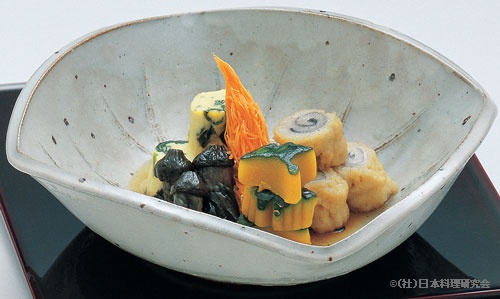
The simmered course's hamo naruto roll is made by filleting the hamo into three pieces, scoring the bones, rolling it with kanpyō (dried gourd…
Masami Watanabe
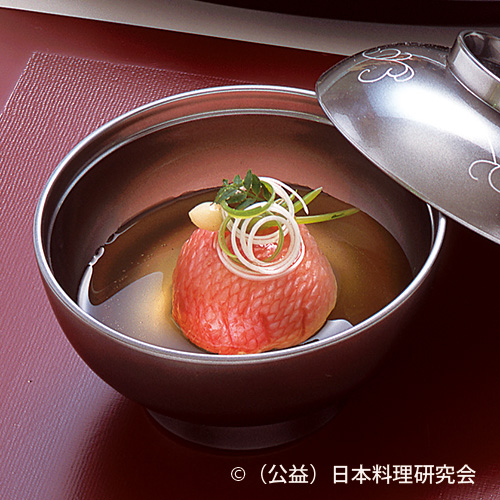
The soup bowl course is kinmedai (splendid alfonsino) shinjo. The kinmedai is prepped, with just the skin removed and set aside. The flesh is…
Yoshinari Watanabe
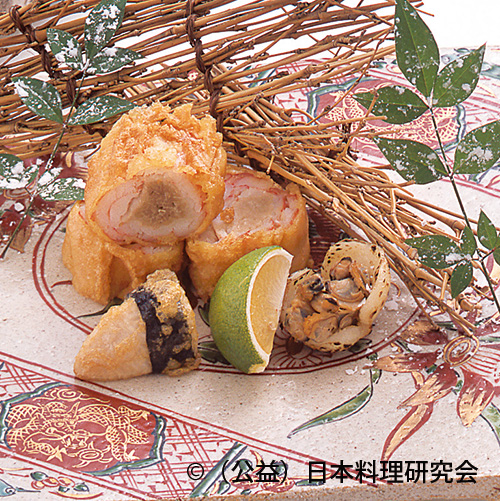
For the crab shinshū-age: soba noodles are half-boiled, coated with fish paste, wrapped in crab, and deep-fried in tempura batter. For the clam and…
Yoshinari Watanabe
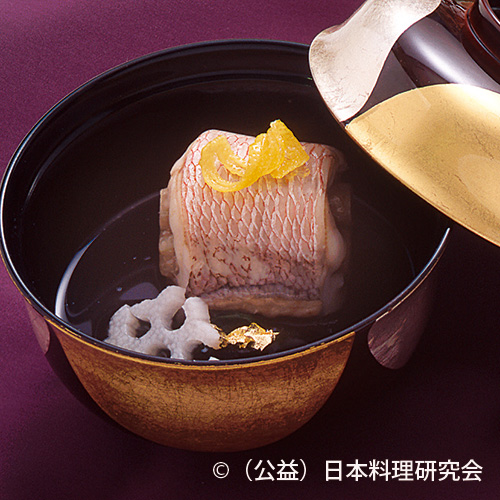
This is the simmered soup bowl course. For the tilefish burdock roll: the burdock is hollowed into a tube shape and simmered in a clear-soup stock…
Japanese Restaurant Aogaki
Takumi Wada
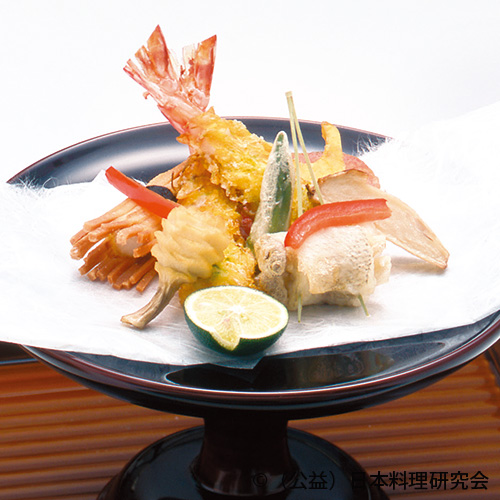
Last is the fried course. For the maki-grade kuruma prawn kikka-age: the prawn is flattened out, and fresh chrysanthemum petals that have been picked…
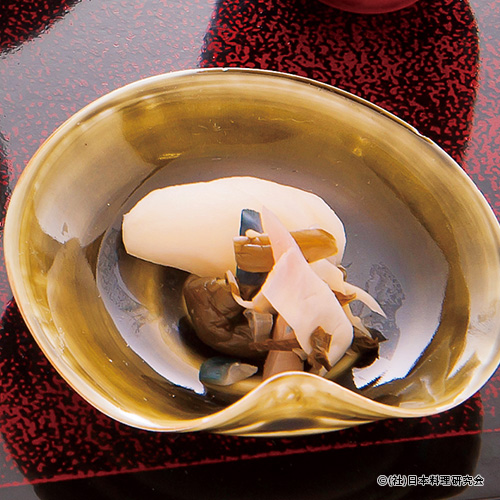
Tokyo Airport Restaurant
Hiroshi Nagashima
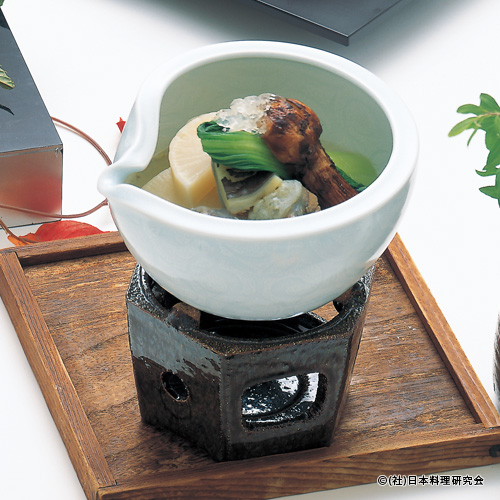
Chikurinan Mizuno
Yuichi Kawai
The simmered course is softshell turtle and dried daikon medicinal simmer. The turtle is simmered slowly, without letting it boil too hard, in equal…
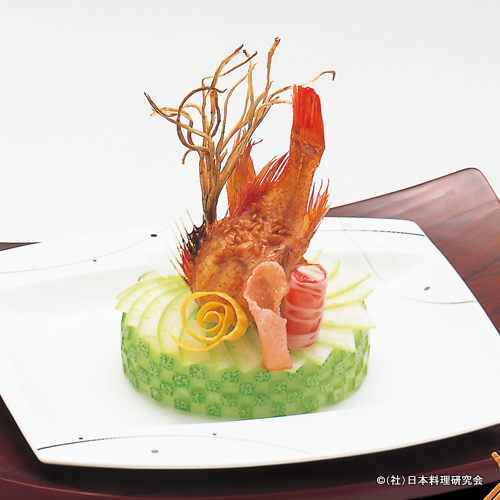
Mitsuo Tamura
Next is the grilled course. For the candied new ginger, simmer it down using sugar at roughly 80% of the ginger's weight (a ratio of about 10 to 8)…
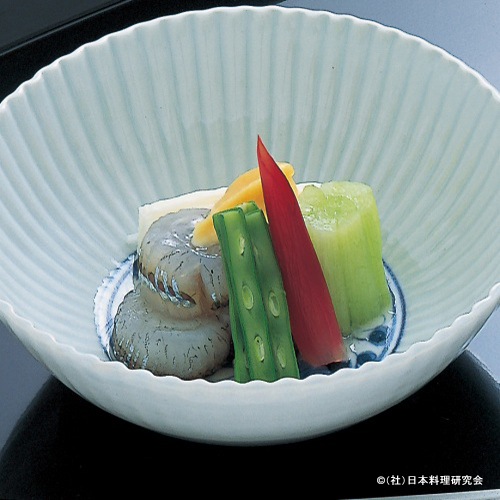
Nobuyuki Ida
First, the appetizer course. At the restaurant, we don't serve these together under one single 'appetizer' heading — we present each one separately…
Hiroshi Kaneko
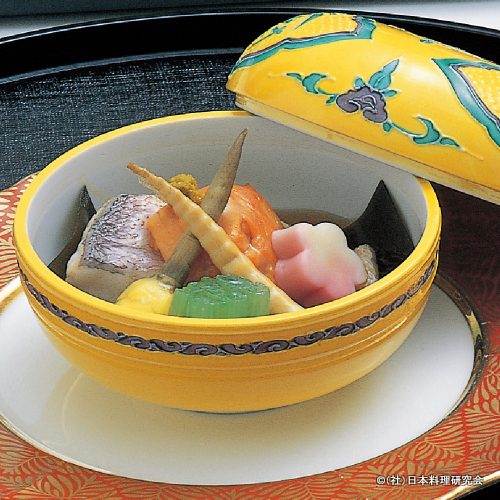
The steamed dish is tilefish steamed with yuba. Well, since it is New Year's after all, one might want to use red sea bream, whose name puns with…
Tsunehito Amari
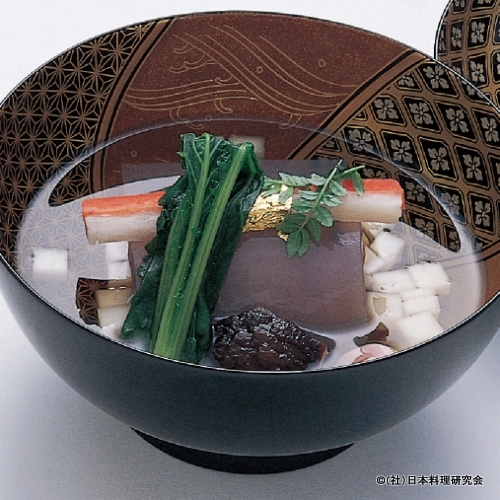
For the sea bream, I first salted it to remove any fishy odor, then plain-grilled it and simmered it in a mellow, mild clear-soup stock before…
Isenishiki
Kaname Watanabe
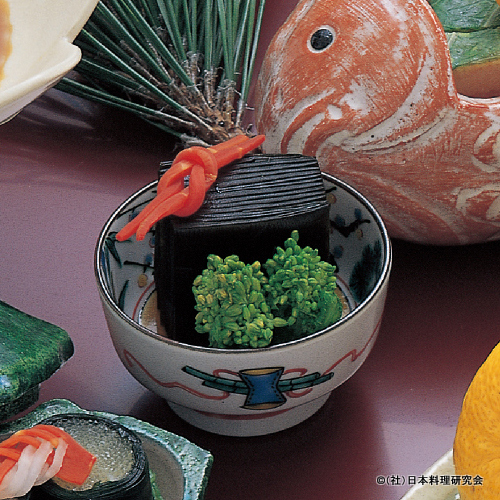
For the tenjō kombu simmered tender, it's fine to use kombu that has already been used for making dashi. After all, it's New Year's, so I worked in…
Isenishiki
Kaname Watanabe
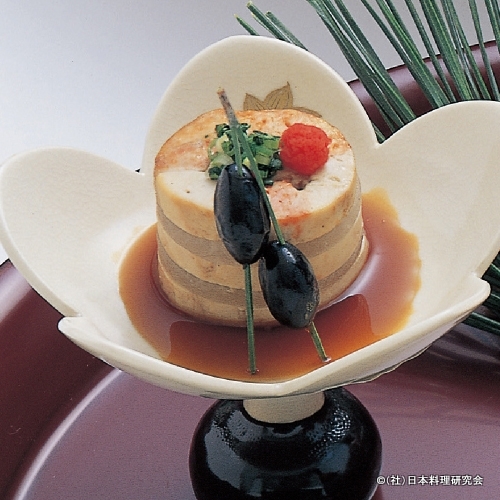
The appetizer course has five dishes; first is the monkfish liver and daikon layered steam. I used salt and pepper to remove the odor from the…
Kiyoshi Yokoi
Katsumori Ashizawa
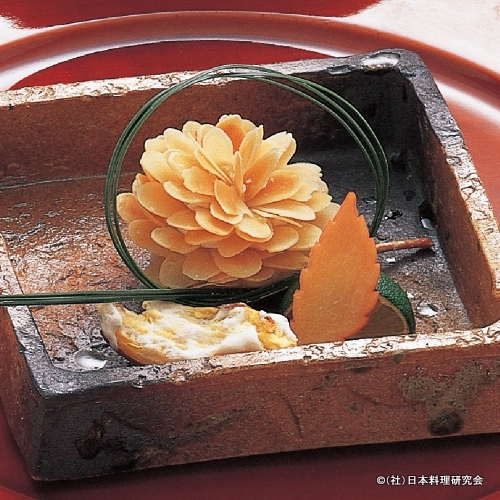
For the pine cone-style sole, the sole (shitabirame) is first pan-seared in butter. Then somewhat thick almond slices are inserted into the flesh one…
Tokyo Kaikan
Naoto Suzuki
Hiroshi Hosaka
Showing 24 of 869